© 2026 Rentokil North America © Gregory Pest Solutions – All Rights Reserved.
Quick Comparison: Flea Bites vs Bed Bug Bites
- Where do the bites appear? Bed bug bites show up on exposed skin during sleep (arms, neck, face); flea bites cluster around ankles, feet, and lower legs.
- How quickly do they develop? Flea bites cause immediate stinging and itching; bed bug bites can take hours or even up to two weeks to appear.
- What do they look like? Bed bug bites are small, red, swollen bumps, often in a line or cluster; flea bites are tiny raised spots, sometimes with a red halo.
- Do they affect pets? Fleas bite both people and pets; bed bugs feed almost exclusively on humans.
- What are the health risks? Fleas can carry diseases and parasites; bed bugs are not known to transmit disease but can cause allergic reactions and sleep disruption.
The Difference Between Bed Bed Bites and Flea Bites
Knowing whether you're dealing with flea or bed bug bites can help you choose the right course of action. The most effective way to identify the culprit is to spot the pest itself and if you can, take a photo. Here's what to look for in each type of bite.
Flea Bites
Fleas are fast movers and opportunistic biters. Unlike bed bugs, you'll usually feel a flea bite right away which is a sharp sting followed by intense itching that can last for days.
- Appearance — Tiny, red, raised spots, sometimes surrounded by a small red halo. Can develop into an itchy rash if scratched.
- Location — Most common around ankles, feet, and lower legs. Fleas can also bite the arms or waistline if they jump from a pet or infested bedding.
- Behavior — Fleas are active jumpers that hitch rides on pets, clothing, and soft furnishings. They breed rapidly in carpets, pet bedding, and upholstery.
- Risks — Fleas can carry diseases and transmit parasites such as tapeworms. Cat fleas, in particular, can spread bacteria that may cause serious infections in both humans and pets. If you notice unusual reactions to flea bites, consult a healthcare professional.
Bed Bug Bites
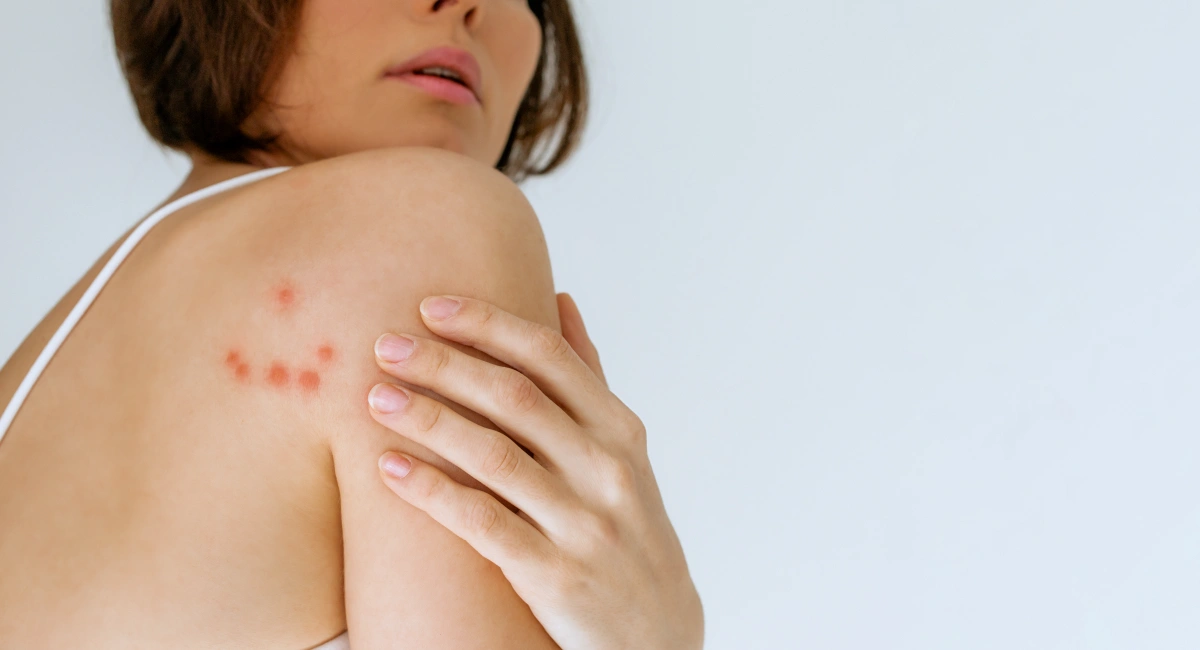
Bed bugs are nocturnal feeders. They inject a numbing agent when they bite, so you won't feel it right away and the bites themselves may not appear for hours or even up to two weeks, depending on your skin sensitivity. Some people show no reaction at all.
- Appearance — Small, red, swollen bumps that can look similar to mosquito bites. Often appear in a line or cluster on exposed skin.
- Location — Neck, face, arms, legs, hands, and torso plus anywhere exposed during sleep. Bed bugs don't bite through clothing.
- Behavior — Bed bugs feed at night while you sleep, then retreat to hiding spots in mattress seams, bed frames, and baseboards.
- Risks — Not known to transmit disease, but excessive scratching can lead to secondary skin infections. Severe allergic reactions, including anaphylaxis, are possible. Seek immediate medical attention if this occurs.
Signs of an Infestation
Bites alone don't always tell the full story. You need to look for physical evidence to confirm which pest you're dealing with.
Signs of bed bugs:
- Small blood stains or dark rusty spots on sheets and pillowcases
- A musty, sweet odor near sleeping areas
- Shed skins or tiny white eggs along mattress seams, bed frames, or baseboards
- Seeing a live bed bug, which resembles a small, flat, and reddish-brown spec, about the size of an apple seed
Signs of fleas:
- Pets scratching, biting, or grooming excessively
- Tiny dark specks (flea dirt) on pet bedding, carpets, or furniture. These look like coarse black pepper
- Seeing small, fast-moving dark insects jumping on floors or soft furnishings
- Bite clusters around your ankles after walking through a room
If you're unsure which pest you have, the safest move is to contact a professional.
Prevention Tips
Treating bites won't stop them from coming back if the underlying infestation isn't addressed. Here are some practical steps to help protect your home:
For bed bugs:
- Inspect luggage and hotel rooms when traveling. Bed bugs are skilled hitchhikers.
- Check second hand furniture, mattresses, and clothing before bringing them indoors.
- Use mattress encasements to limit hiding spots.
- Reduce clutter around sleeping areas.
- Wash and dry bedding on high heat regularly.
For fleas:
- Work with your veterinarian to keep pets on year-round flea prevention.
- Vacuum carpets, upholstery, and cracks frequently and empty the vacuum outside.
- Wash pet bedding in hot water regularly.
- Keep grass trimmed and remove yard debris where fleas and their hosts may shelter.
- Treat both your pets and your home at the same time. Treating one without the other rarely works.
Frequently Asked Questions
Neither is pleasant, but they pose different challenges. Bed bugs are harder to eliminate and can cause significant sleep disruption and psychological stress, though they don't transmit disease. Fleas can spread disease and parasites to both people and pets, and their eggs spread easily throughout the home. The pest that poses the greater threat depends on your specific situation.
You can ease discomfort by washing the area with soap and water, avoiding scratching, and applying a cold compress. Over-the-counter antihistamines or hydrocortisone cream may help with itching. However, if bites become red, swollen, or show signs of infection or if you have a severe allergic reaction, see a healthcare professional right away.
Look for physical evidence beyond the bites. Bed bugs leave blood stains, dark fecal spots, and shed skins near sleeping areas. Fleas leave flea dirt on pet bedding and carpets, and you may spot them jumping. If you're still unsure, contact us today. Our technicians can inspect your home and give you a definitive answer.
DIY methods can help with mild cases, but they often fall short of breaking the full pest life cycle. For persistent or severe infestations, professional treatment is the most reliable solution.
Book Your Free Pest Inspection Today
Our local technicians will assess your property and recommend tailored solutions. Fast, friendly, and completely obligation-free.
- Safe, targeted treatments
- Local experts, fast response
- Trusted, trained technicians