© 2026 Rentokil North America © Gregory Pest Solutions – All Rights Reserved.
Here at Gregory Pest Solutions, we strive to make sure you and your family live in an environment safe from harmful pests. We also think it’s important to educate our customers on different types of pests found throughout our service area so they know exactly what they’re up against when they call us. That being said, our Smarter pest control™ field team previously identified breeding sites for Brown Recluse Spiders here in our hometown of Greenville, South Carolina.
It’s extremely rare to find Brown Recluse spiders in the Carolinas, as they’re typically found in Tennessee, Kentucky, and the Midwest. Throughout the history of South Carolina, only 10 verified sightings have been recorded. Our sighting in 2017 is thought to be the most recent.
Brown Recluse Identification
Although it’s rare to find a Brown Recluse in your home if you live in the Southeast, it is possible that they will become more prevalent through the distribution of goods from their natural range and subsequent localized breeding. They have a very unpleasant bite, so proper identification and pest prevention are the best options to keep yourself safe.
Brown Recluse Spiders have a leg span around the size of a US quarter, with a body that can be between ¼ inch and ½ inch in size. They have six eyes in pairs (most spiders have eight) and are often identified by a dark brown violin shape on their backs. As the name suggests, this species is well known for its “reclusive” behaviors. They prefer to take residence in warm, dry and dark environments, such as woodpiles, basements, and closets.
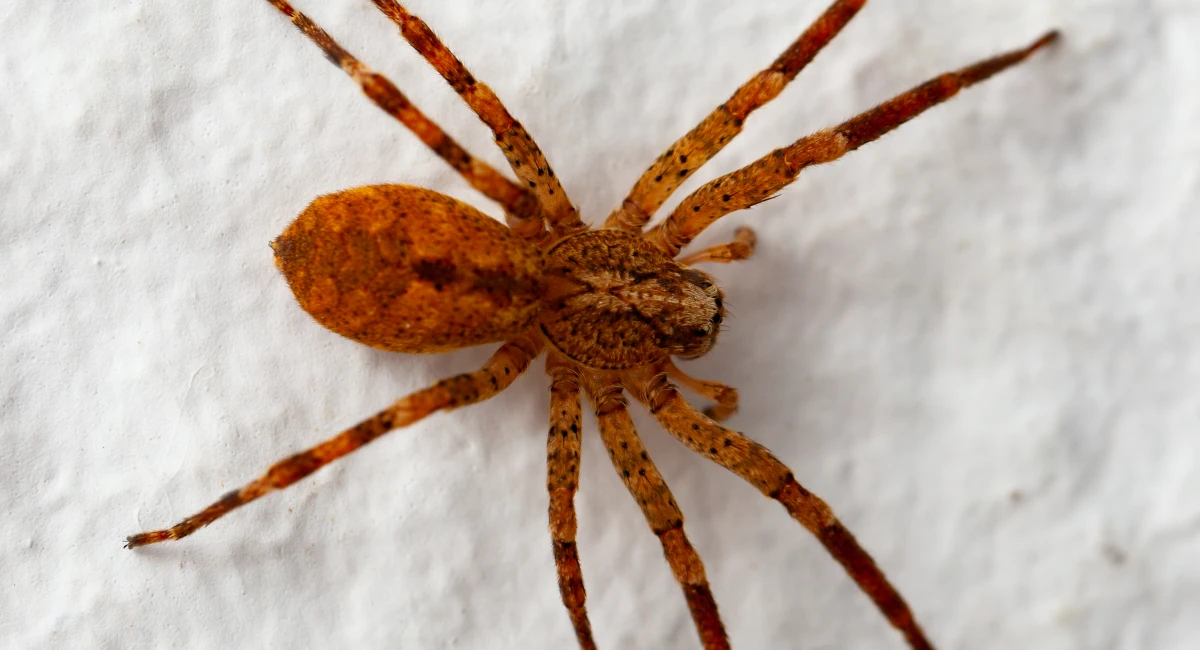
Are Brown Recluse Spiders Poisonous Or Venomous?
Brown recluse spiders are not aggressive, but they do have a venomous bite. They rarely bite unless they’re squeezed against the skin or trapped in clothing. However, their bites are a serious cause for concern. The venom is cytotoxic, which means it destroys tissue. That means that bites can result in wounds that are slow to heal and that can even turn necrotic. About 10% of bites can result in severe tissue damage.
“As the brown recluse is known for its damaging bites, many assume that this spider is aggressive when the opposite is true,” says Missy Henriksen, vice president of public affairs for the National Pest Management Association (NPMA). “This arachnid bites, usually unintentionally, when it feels trapped. Whether we dig through our storage in the attic or wear a piece of clothing in which a brown recluse has made its home, their bites are reactionary. Therefore, the sheer presence of this pest can increase the potential pest-related health risks facing homeowners and their families.”
NPMA offers the following tips to help prevent contact with brown recluse spiders:
- Avoid keeping clothing and shoes on the floor and consider storing inside plastic containers.
- Shake out all clothing that has been in a hamper before wearing or washing.
- Keep garages, attics, and basements clean and clutter free.
- If a spider bites you, contact your primary care physician for medical advice.
If you are concerned about spiders in your home, please call Gregory Pest Solutions so we can help you get rid of these harmful pests.
Our technicians are ready to rid your space of unwanted pests.
Frequently Asked Questions
Brown recluse spiders are mostly found in the south-central and Midwestern United States, from southern Iowa through Texas to western Georgia. They are most abundant in states like Missouri, Kansas, Oklahoma, Arkansas, and Louisiana. However, they have been found in the Carolinas too.
Seeing one spider could indicate a brown recluse infestation. Although brown recluse spiders don’t form colonies, they can form high-density populations if space and food are abundant.
Brown recluse spiders spin irregular, “untidy” webs, unlike the symmetrical cobwebs made by other spiders. They’ll often build a hiding area out of disorderly threads as well.
The main differences between a brown recluse and a huntsman spider are size, color, markings, and number of eyes. Huntsman spiders can grow up to five inches in size and don’t have the brown recluse’s distinctive violin pattern. Brown recluse spiders are a uniform brown in color with six eyes, whereas huntsman spiders are mottled gray with eight eyes. And huntsman spiders are harmless to humans, unlike the venomous brown recluse.
Book Your Free Pest Inspection Today
Our local technicians will assess your property and recommend tailored solutions. Fast, friendly, and completely obligation-free.
- Safe, targeted treatments
- Local experts, fast response
- Trusted, trained technicians