© 2026 Rentokil North America © Gregory Pest Solutions – All Rights Reserved.
Smarter Answers
I've spotted tiny white specks in or around damaged wood in my home—could these be termite eggs or larvae?
Termite eggs and larvae are rarely seen in open areas because they’re kept deep inside the colony where they are protected. People often notice “tiny white specks”, but it can be difficult to confirm whether they are termite larvae or eggs without a professional inspection.
Termite eggs are very small (often pinhead-sized), oval, and whitish to translucent. The queen lays thousands of eggs throughout her lifetime. They’re typically found in clusters in sheltered areas deep inside the colony, such as inside wood galleries, behind walls, under floors, or underground nests, in the case of subterranean termites.
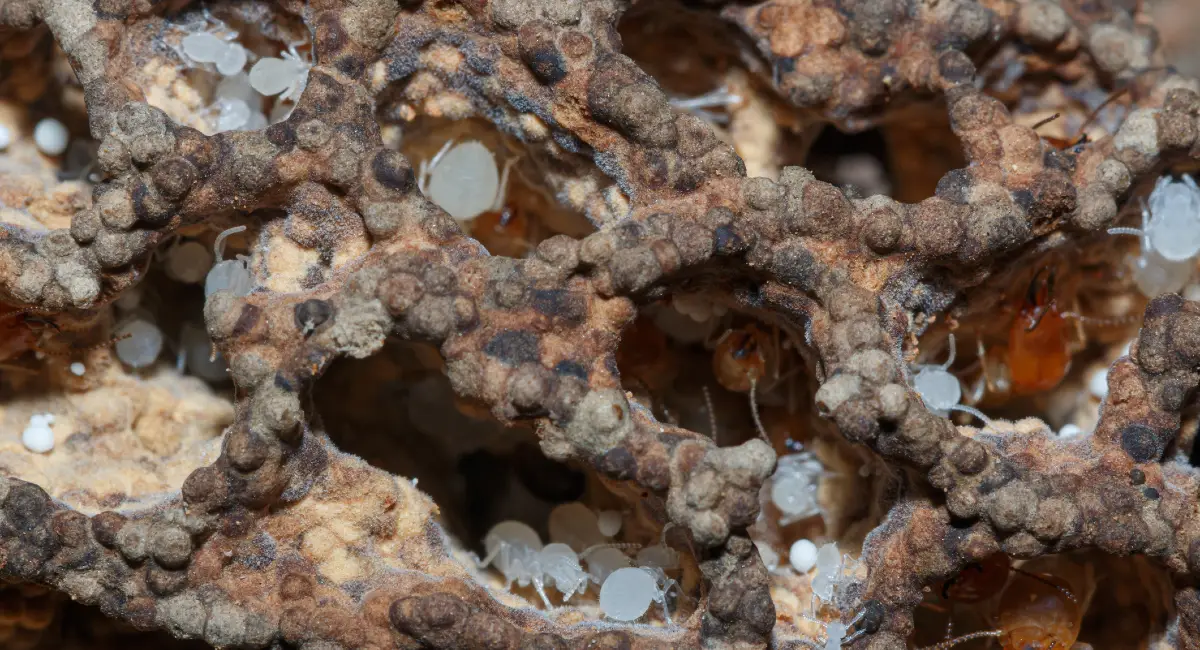
Termite larvae are also small, pale to whitish in color, and soft-bodied. They can look like miniature, less-developed worker termites and may appear slightly grub-like depending on age and lighting. As they grow, they molt and develop into workers, soldiers, or future reproductives based on colony needs.
Because these life stages remain hidden, better indicators of activity include swarming near windows, mud tubes on foundations or walls, hollow-sounding wood, blistered or damaged wood, and frass (for drywood termites). Identifying the specific termite species and confirming the presence of active galleries are the only ways to ensure structural integrity. A professional assessment can differentiate between common regional species and determine the appropriate commercial or residential termite treatment plan to protect your property value and long-term investment.
Seeing Signs of Termites?
Speak with your local pest control expert for fast advice and a free inspection.
Book a Free Inspection