© 2026 Rentokil North America © Gregory Pest Solutions – All Rights Reserved.
Ant baits are a proven long-term solution for many common species in North and South Carolina. Unlike sprays or powders that only scratch the surface, baiting disrupts entire colonies, including those hidden deep inside walls, soil, or insulation. Patience, correct bait selection, and placement are all key to a successful strategy that should also include good sanitation and prevention techniques.
When battling ant infestations, you need to know which bait to use for the most prevalent species in the region, such as odorous house ants, Argentine ants, and carpenter ants. This guide explains how baits work, the different types available, and the best bait for exterminating pharaoh ants, carpenter ants, and sugar ants, among others.
What Is Ant Baiting?
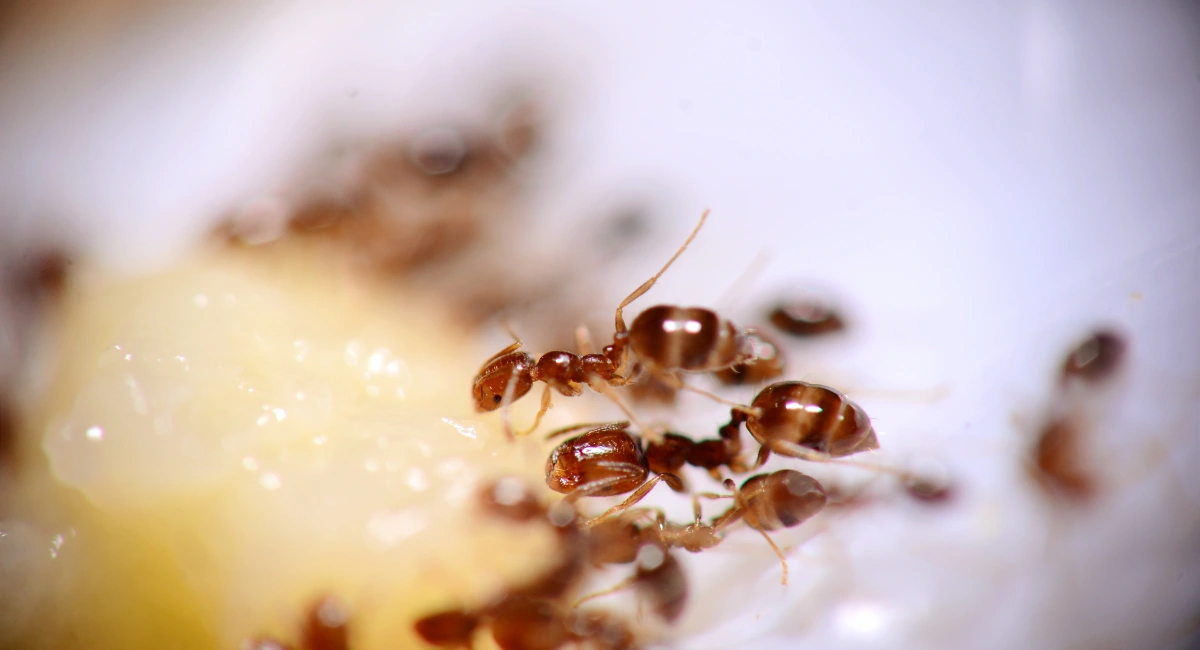
Ant baiting targets the entire colony, not just the visible worker ants. This method uses bait products that combine a slow-acting active ingredient with an attractant (which can be sweet, greasy, or protein-based, depending on the ant species). Worker ants collect this bait, carry it back to the nest, and share it with the rest of the colony, including the queen.
The delayed effect of the bait is crucial, as it prevents ants from being immediately alerted to its fatal outcome. This allows for widespread distribution throughout the colony before the effects become apparent, avoiding any preventative measures. Ants will abandon a food source if they associate it with sickness or danger, and have been known to place debris around a liquid bait. This behavior is linked to their instinct to cover liquids to prevent drowning, which effectively makes the bait less accessible.
Ultimately, baiting disrupts the reproductive cycle or kills the queen, effectively stopping the infestation at its source. This approach is particularly advantageous when dealing with ants nesting in hard-to-reach locations, such as inside wall voids, under concrete slabs, or deep within landscaping beds commonly found around suburban areas of Charlotte and Columbia.
Types of Ant Bait
Not all ant baits are the same, and using the wrong type can make it ineffective. This is because individual species behave differently and respond better to particular types. Success depends on the current nutritional needs of the colony, although seasonality also plays a role.
Ants tend to be active and forage more in spring and summer when temperatures rise. This is a good time for baiting, since colonies are expanding and worker ants are constantly on the move, searching for food.
There’s no single bait type that works best for all ants; however, understanding ant behavior and feeding patterns can help when selecting the right bait to solve your problem:
- Sweet-feeding ants (e.g., Argentine ants, carpenter ants, pavement ants, odorous house ants) are primarily attracted to sugars and carbohydrates, which provide the high energy needed for active workers.
- Protein/Grease-feeding ants (e.g., Pharaoh ants, fire ants) often prefer protein and fats, especially when the colony is developing new brood (larvae need protein to grow) or when queens need to lay eggs.
How to Determine the Right Bait
To determine which bait will attract more ants in a specific situation, a simple test is recommended:
- Place a small dab of peanut butter (protein/grease) and a small dab of honey or jelly (sugar) on a piece of paper or an index card.
- Place the card near an active ant trail.
- Observe which food source the ants are most attracted to.
- Use a bait product that matches their current preference for the best results.
While sweet baits are a very common attractant for many household ant species, more ants will respond to the specific bait that meets the colony's immediate dietary requirement, whether it's sweet, grease, or protein.
Ant Bait Placement
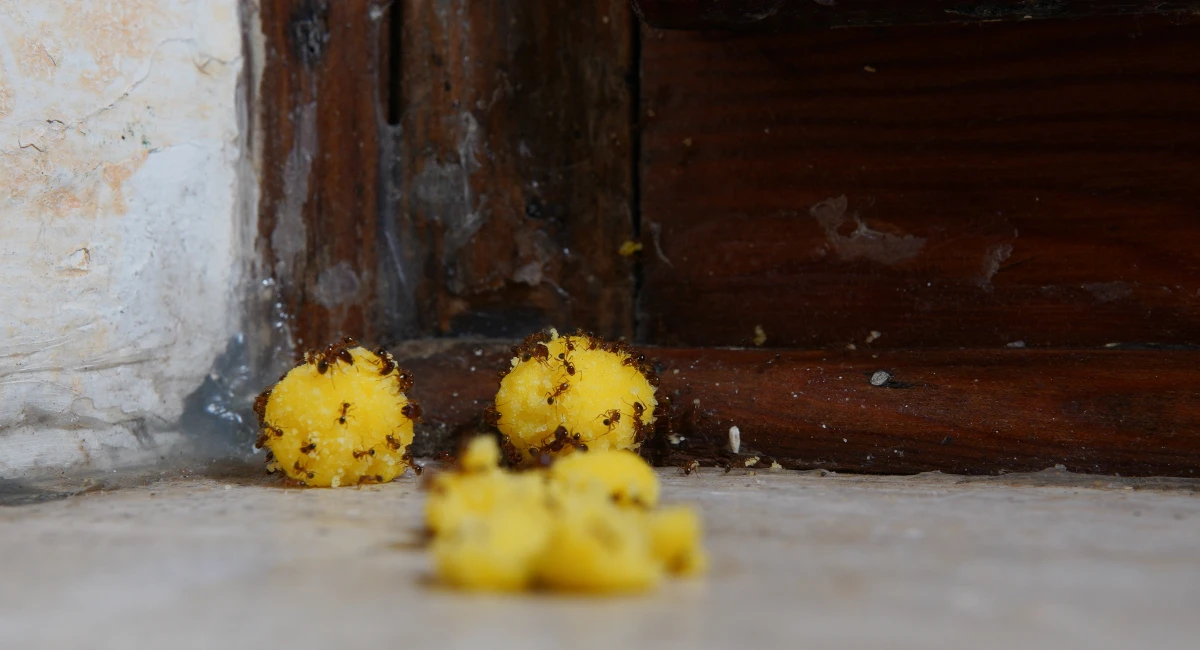
The success of any baiting program depends on where and how bait is placed. In both homes and commercial buildings, ants travel along walls, baseboards, plumbing lines, and utility chases. Knowing where scent trails originate from and lead to helps determine where ant baits should be placed. Whether you're protecting a small home in Greenville or a commercial site manager in Raleigh, the right bait in the right place makes a significant difference to the outcome.
For best results, place bait in discreet locations around home pantries, bathrooms, laundry rooms, garages, not forgetting outside on patios or near foundations. Site managers in regulated industries, like foodservice, healthcare, pharmaceutical, and manufacturing sectors, should take a more tailored approach to protect their commercial interests.
Strategically placing grease or protein-based baits and sweet gels in break rooms, under kitchen equipment, near dumpsters, and storage units will provide broad coverage for a wide range of species. Moreover, baits in low-traffic areas, such as along building foundations, will reduce the spread without interfering with day-to-day operations.
Why Baiting Is Better Than Spraying
Sprays may kill visible ants on contact, but they often leave the heart of the colony untouched. These products target foraging ants, the ones you see, but rarely reach the queen or the thousands of ants hidden in tunnels or wall voids. Because the colony remains intact, the problem typically comes back.
In some cases, sprays can actually make ants harder to manage. Certain species, such as Pharaoh ants, react to disturbance by splitting their colonies into smaller, separate nests, a behavior known as budding. This can cause the infestation to spread even further, making control more difficult. Sprays can also repel ants, causing them to avoid treated areas and find new entry points elsewhere in or around the property.
Baiting is more subtle and covert, taking ant colonies by surprise. That’s why it’s a key part of our Integrated Pest Management (IPM) plans for homes and businesses. It targets the root of the problem, not just the symptoms.
Why Choose Gregory Pest Control for Ant Elimination?
Gregory Pest Control uses science-backed strategies to help manage ants across properties in North and South Carolina. Our team understands the behavior and preferences of regional ant species and uses that knowledge to create targeted, effective baiting plans.
We use IPM to maximum effect, combining monitoring, inspection, and customized treatments. That means we don’t rely on just one product or service. We focus on reducing ant populations at the source while helping keep your home or business protected.
Our commitment extends beyond just eliminating active infestations. We aim to provide long-term prevention, ensuring our customers receive comprehensive solutions tailored to their specific needs and property types. Contact us today to schedule a visit, and we’ll take care of the problem for you.
If you need professional help with an ant infestation, schedule your free inspection today, and protect your property.
Book Your Free Pest Inspection Today
Our local technicians will assess your property and recommend tailored solutions. Fast, friendly, and completely obligation-free.
- Safe, targeted treatments
- Local experts, fast response
- Trusted, trained technicians