© 2026 Rentokil North America © Gregory Pest Solutions – All Rights Reserved.
Fire ants may have a bad reputation due to their painful stings, but it’s good to know your enemy, right? Because then you can help protect you, your family and your property.
If you live in North Carolina or South Carolina, it’s especially important to understand fire ants because both states are in the USDA’s quarantine zones. The U.S. Department of Agriculture reports that fire ants now infest over 367 million acres in the southern United States, and both Carolinas have large populations.
Despite the danger these small red menaces pose, they are fascinating insects. Here are some surprising facts about fire ants that might change how you see them and help you protect your property from these pests.
1. There are Over 280 Different Species of Fire Ant
There are both native and imported varieties of fire ants, which traveled to America in the early 20th century. The imported fire ants tend to be more aggressive, but all varieties are capable of painful stings and are part of the genus Solenopsis. The red imported fire ant (Solenopsis invicta) is the best-known and has spread quickly across the Southeast, including North and South Carolina.
The warm, humid climate in the Carolinas helps fire ant colonies thrive all year, so professional ant control is important for homeowners.
2. Fire Ants Can Be Extremely Aggressive and Kill Small Animals
Fire ants are known to prey upon other insects, birds, small animals, and even livestock. In agricultural areas of South Carolina and North Carolina, farmers have reported fire ant attacks on young livestock, including calves and foals, which can be fatal if the animals can’t escape.
Fire ant venom contains a toxic alkaloid called solenopsin, which can cause itchy welts in most humans. The sting produces a characteristic burning sensation, then a white pustule forms within 24 hours.
If you have a fire ant allergy or are hypersensitive, you may experience more severe reactions, including chest pains, nausea, difficulty breathing, and swelling. In worst-case scenarios, anaphylactic shock can occur, requiring immediate medical attention.
If you experience symptoms beyond localized pain and swelling, seek medical attention immediately.
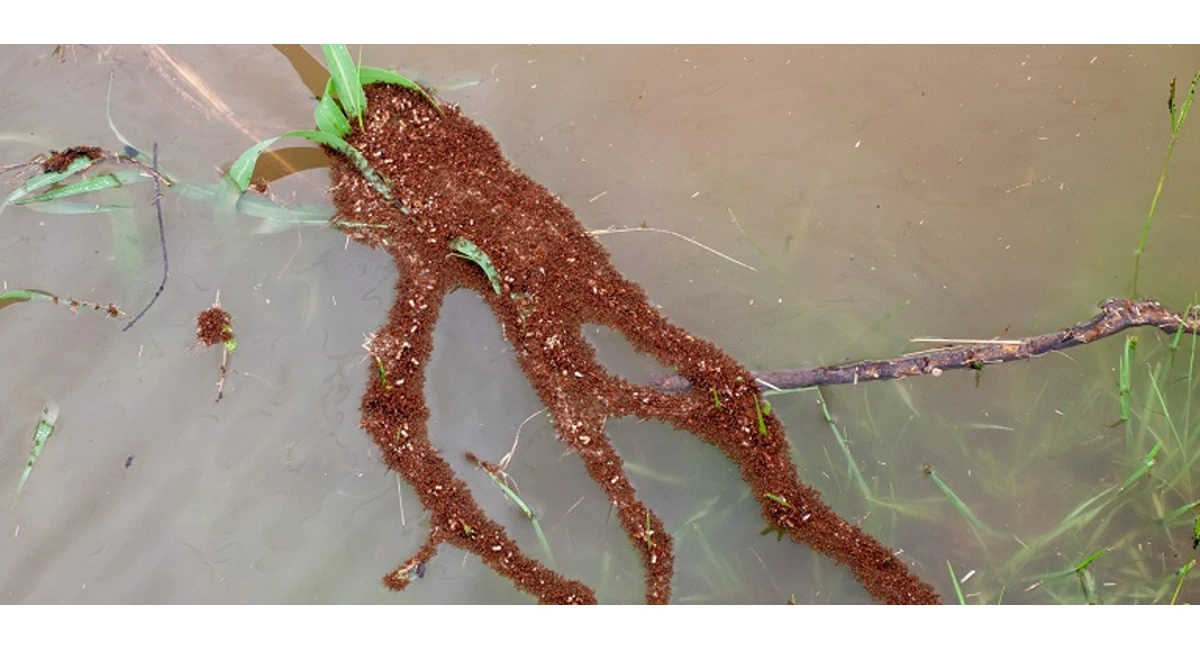
3. During a Flood, Fire Ants Will Bind Together To Make a Raft
Studies show that fire ants can build a raft in just two minutes by locking their legs together and trapping air bubbles, which helps them float. This adaptation makes it hard to control them after floods and lets their populations spread quickly after big storms.
This behavior has been particularly observed during hurricanes and tropical storms that frequently impact North Carolina and South Carolina. During Hurricane Florence in 2018, which devastated parts of both Carolinas, floating fire ant rafts were spotted in floodwaters, posing an additional hazard to rescue workers and displaced residents.
4. Fire Ants Love Direct Sunlight
You can usually find cone-shaped or domed fire ant mounds in fields, pastures and lawns where they’re subject to constant sun. The ants use the heat to warm the nest to a cozy 78 degrees to keep their eggs incubating. Fire ant nests can prove hazardous for human workers harvesting crops and picking fruit in open areas.
In North Carolina and South Carolina, their mounds are common in open places like golf courses, parks, sports fields, and home lawns.
5. They Don’t Have Ears
If there is danger, fire ants will release signal pheromones that alert others to the threat. Instead of listening for sounds, fire ants use their feet to feel for vibrations that tell them where things are located. Creating vibrations can be dangerous. Fire ants are more likely to bite something that is moving rather than still. Unfortunately, reacting to a single fire ant bite could trigger many more.
6. They Do Have Wings
Certain members of the ant colony have wings. These are the reproducers who will fly away from an existing colony to establish a new one. Once the female winged fire ant is fertilized, she will shed her wings and remain on land to begin the new nest.
7. Fire Ants Are Crazy Strong
Fire ants can lift 20 times their own body weight. That’s the equivalent of a 100 pound human lifting a ton!
This strength lets them carry food much bigger than themselves, such as seeds, dead insects, and even small pieces of meat or fruit, back to the colony.
Their strength also helps fire ants build complex underground tunnels and move lots of soil when making their mounds. In South Carolina and North Carolina, where the soil is often heavy with clay, this digging can cause trouble for homeowners by damaging lawns, gardens, and even sidewalks and driveways.
Fire ants have strong jaws that let them bite and hold onto skin while they sting several times, usually three to eight times in a circle. Their strength and aggressive behavior make them tough pests that often need professional help to control.
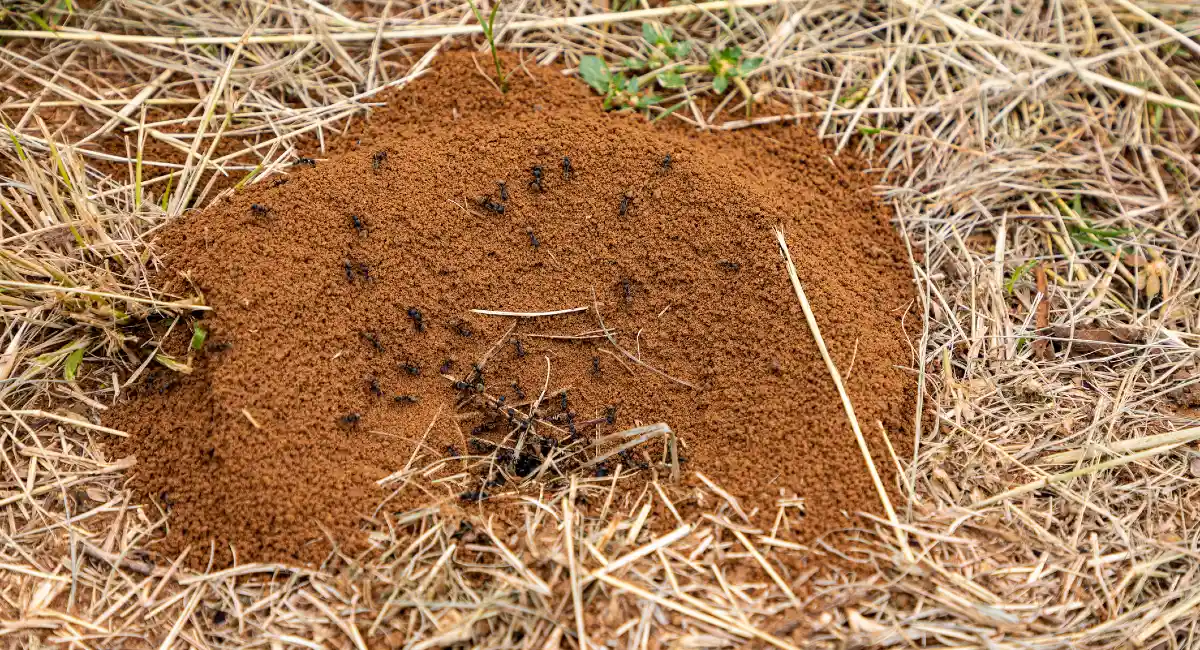
8. Their Nests Are Bigger Than You Think
Fire ants build tunnels underground up to 25 feet in length. Not only are these distances impressive, the tunnels are designed to provide just the right stability for travel so that ants can zip up and down them at the equivalent of 30 mph for humans.
9. Populations Continue to Grow and Expand
Fire ants are prolific spreaders. If you think there are more of them now than there used to be, you’re probably right. Originally concentrated in southern states as a result of foreign soil in the form of ship ballast, fire ants have increased their numbers and have spread in all directions.
Both North Carolina and South Carolina are now fully within the USDA's fire ant quarantine zone, which regulates the movement of soil, plants, and other materials that could spread these invasive pests. According to the USDA APHIS, fire ant infestations now cover more than 367 million acres across 14 states and Puerto Rico.
Experts predict that fire ants will keep moving north as winters get warmer. Research in the journal Ecosphere shows that places like Virginia, Maryland, and parts of the lower Midwest could become good habitats for fire ants in the future.
For the Carolinas, this means fire ants will likely remain a problem unless control efforts continue. In North Carolina and South Carolina alone, homeowners, farmers, and municipalities spend millions each year combating these invasive pests.
10. Fire Ants Like Laundry Piles
People have found swarms of fire ants in laundry piles, especially in wet clothes or after rain and flooding. They may be looking for moisture during dry times or attracted to oils or food left on clothing. In the humid summers of North Carolina and South Carolina, this happens more often.
Check your clothes piles carefully if they've sat alone for a while, especially in garages, sheds, or outside. Always shake out clothes, shoes, and towels that were left outside before bringing them in or wearing them. This simple step can help you avoid painful stings and keep fire ants out of your home.
Professional Fire Ant Control
It’s better to prevent fire ants before they infest your property. But if you already have fire ants in your house and elsewhere, we can still help.
You can usually tell that fire ants are in your yard by the dome or cone-shaped mounds they build. When exploring for food, they usually enter and exit the mound from holes on the sides. The exit holes on top are mainly used for defending the mound when it is attacked.
Between February and early spring, the mound top will show fresh dirt, signaling that the ants are more active. This is the best time for Gregory Pest Solutions to begin applying TopChoice, our preferred treatment for fire ants. It helps control fire ants and also helps prevent new fire ant mounds from developing.
If you need professional help with an ant infestation, schedule your free inspection today, and protect your property.
Book Your Free Pest Inspection Today
Our local technicians will assess your property and recommend tailored solutions. Fast, friendly, and completely obligation-free.
- Safe, targeted treatments
- Local experts, fast response
- Trusted, trained technicians