© 2026 Rentokil North America © Gregory Pest Solutions – All Rights Reserved.
The high humidity, loose granular soil, and lush vegetation in North & South Carolina are too good to pass up for roaming ant colonies. Although they can live almost anywhere, ants love lawns that offer a perfect blend of food, moisture, and shelter, which is why our state is paradise for them.
With such perfect conditions, colonies rapidly spread across turf, garden beds, and into nearby structures - and without intervention, ants in lawn areas can cause widespread soil disruption, making outdoor spaces harder to enjoy. However, understanding how ants behave and what brings them to your yard can help you regain control.
Why Are Ants in My Lawn?
Ant colonies favor lawns that offer soft, well-drained soil and dry spots with limited foot traffic, as these conditions are ideal for tunnelling and expanding their nests. They also prefer sunny, south-facing years where the ground heats up during the day.
In the southeastern U.S., common lawn invaders include Argentine ants, pavement ants, and field ants. Some ant species live in shallow tunnels near the surface, while others dig deeper chambers where queens and larvae remain protected. Ants in these colonies rarely stay confined to one area; instead, they branch out to form satellite nests, which can quickly spread the problem across large sections of the yard.
Colonies often become most active during spring and summer when food sources increase and the soil is easier to dig. Lawn irrigation can also play a role. Excess water, combined with warm temperatures and loose soil, creates an ideal environment for colony expansion. Once ants are established, they can be hard to manage without damaging your lawn in the process.
Do Ants Eat Grass?
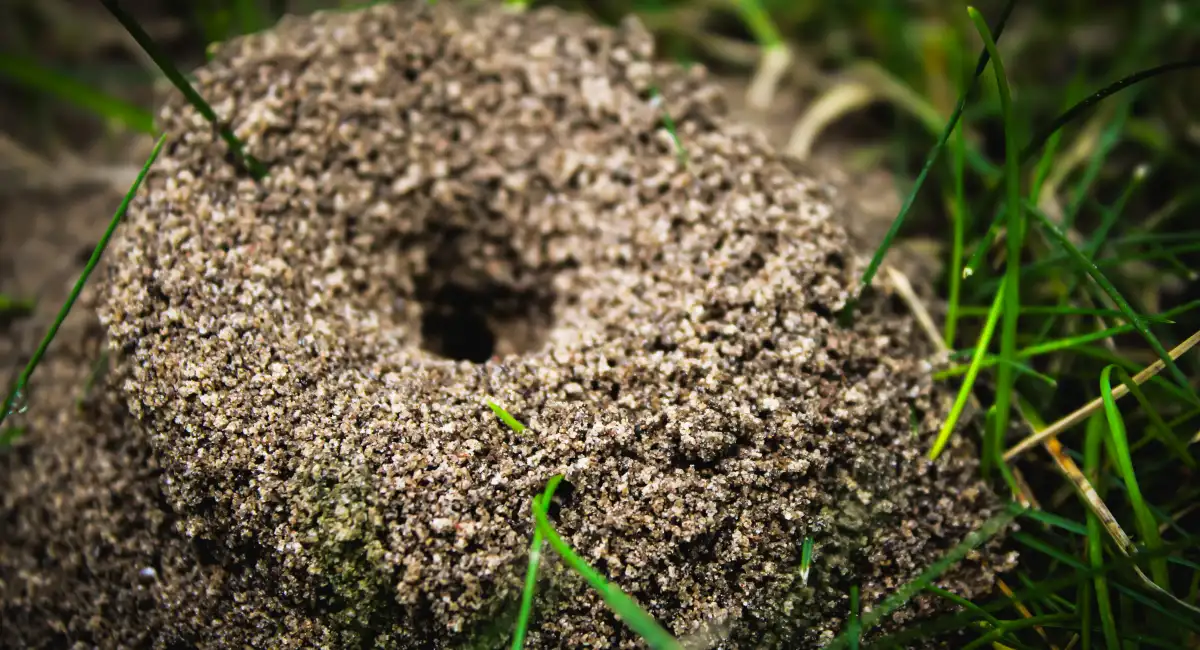
Lawn ants don’t consume grass blades; however, underground nests interfere with root systems, which can lead to patches of dying or yellowing grass. Mounds built at the surface smother the turf and block water from reaching the soil below.
Some ants actively farm honeydew-producing insects, like aphids and scale. These soft-bodied insects feed on plant sap and damage lawns by draining energy from grass blades. Ants protect them in exchange for honeydew, allowing these pests to multiply quickly.
So, while ants do not eat grass directly, their colonies can damage turf through both soil disruption and their relationship with other insects. This indirect impact makes lawn ant control crucial to maintain a healthy yard.
Impact of Lawn Ants on Property
The visible damage from ants in grass, such as mounds and trails, is just the beginning; these pests can cause significant long-term problems in your lawn. Their tunneling disrupts soil, leading to uneven water drainage, inconsistent grass growth, and unsightly patches. Larger colonies may extend their reach into mulch beds, under paving stones, and even into wall voids of nearby structures. Some species can even excavate soil beneath walkways, potentially causing minor shifts or settling.
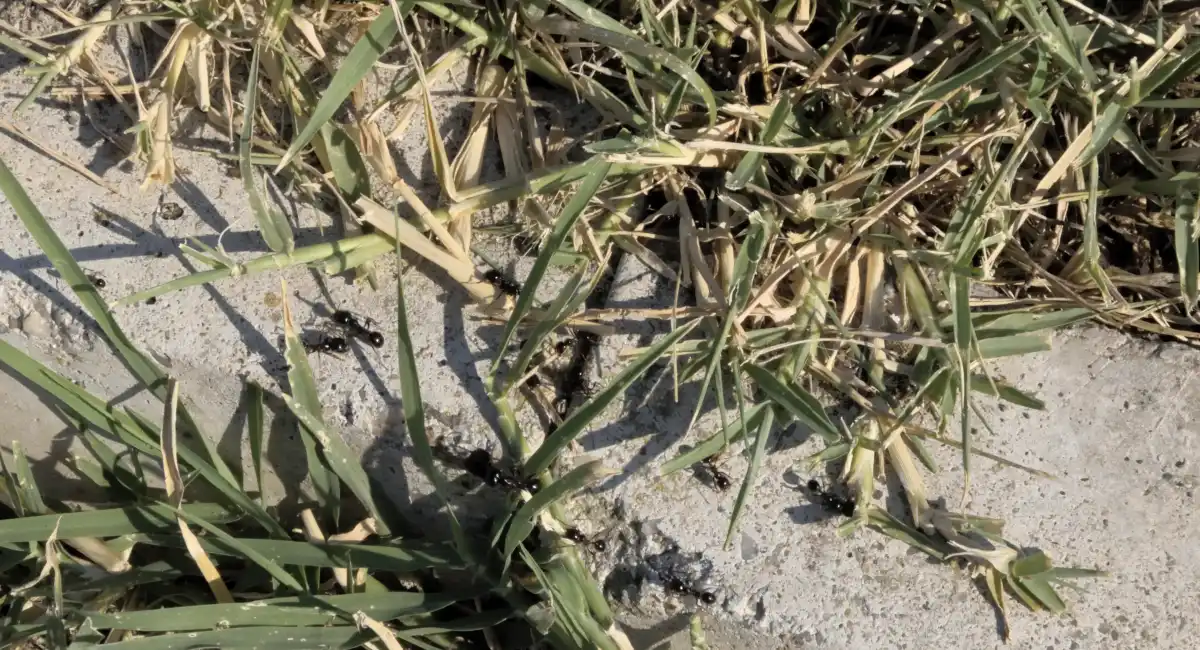
While most lawn ants are not aggressive, certain species can sting when disturbed, particularly near their mounds. Their presence can deter outdoor activities and complicate lawn maintenance. Effective removal is challenging due to ant behavior; workers use scent trails to coordinate across large areas quickly. Treating only a portion of the colony often results in ants simply relocating and rebuilding elsewhere.
How to Get Rid of Ants in Lawn Areas
Homeowners often don’t realize they have an ant problem until the colony is well-established, with thousands of workers and drones serving one or multiple queens and their larvae. Getting an ant infestation under control can take time and perseverance. Here are a few common ways to deal with ants in lawn areas:
- Disrupt mounds manually
Raking or flattening visible mounds can disturb surface activity and may encourage ants to move. This method won’t eliminate the colony, but it can make the area less appealing for ants to rebuild. - Use ant baits
Baits are one of the most effective options for long-term control. Worker ants carry the bait back to the colony, which helps disrupt the population from the inside. When used correctly, baits reach deeper tunnels where sprays or flooding won't. - Try natural spot treatments (with care)
Some homeowners apply soapy water or vinegar to visible nests. These may reduce surface activity for a short time, but they usually don’t reach the heart of the colony. These treatments can also harm grass if overused or applied in hot weather. - Avoid surface sprays
Contact sprays may kill ants on sight, but they don’t usually stop the colony. In fact, they can induce colonies to split and relocate, making them harder to manage. - Improve lawn conditions
Ants prefer compacted or dry soil. Aerating your lawn, improving drainage, and managing thatch can make the environment less attractive. Healthy, dense turf is harder for ants to tunnel through.
Why Choose Gregory Pest Control for Lawn Ant Control
Ant colonies are often larger and more complex than they appear on the surface. At Gregory Pest Control, we understand how ant behavior, soil type, and lawn conditions intersect, and we use that insight to build treatment plans that work.
Our locally-based technicians know what attracts lawn ants to homes in and around North & South Carolina. Every property is different, so our approach considers your location and property dimensions, and ends with an ant control plan built around your lawn.
If you’re dealing with recurring mounds, shifting turf, or ants disturbing your peace, reach out to Gregory Pest Control to learn more about our lawn ant control services and how we can help to protect your property.
If you need professional help with an ant infestation, schedule your free inspection today, and protect your property.
Book Your Free Pest Inspection Today
Our local technicians will assess your property and recommend tailored solutions. Fast, friendly, and completely obligation-free.
- Safe, targeted treatments
- Local experts, fast response
- Trusted, trained technicians