© 2026 Rentokil North America © Gregory Pest Solutions – All Rights Reserved.
Quick Comparison: Bed Bug Bites vs. Mosquito Bites
- When do the bites appear? Mosquito bites show up within minutes, while bed bug bites can take hours or even up to two weeks to develop.
- What's the pattern? Bed bug bites often appear in a line or cluster. Mosquito bites are usually single, scattered marks.
- Where on the body? Bed bugs bite exposed skin during sleep, such as your arms, neck, or face. Mosquitoes bite any exposed skin, especially when you are outdoors.
- What time of day? Bed bugs feed at night while you sleep. Mosquitoes are most active at dawn and dusk.
- Do they spread disease? Mosquitoes can transmit serious illnesses like West Nile virus and Zika; bed bugs are not known to spread disease, but their bites can cause significant discomfort and sleep disruption.
- What are the health risks? Fleas can carry diseases and parasites; bed bugs are not known to transmit disease, but can cause allergic reactions and sleep disruption.
The Difference Between Bed Bug Bites and Mosquito Bites
Both bites cause itching and irritation, but the culprit behind them behaves very differently. Understanding those differences helps you choose the right response and the right pest control solution. According to the CDC, bed bugs are not known to transmit disease, but their bites can cause itching, sleep loss, and, in rare cases, allergic reactions.
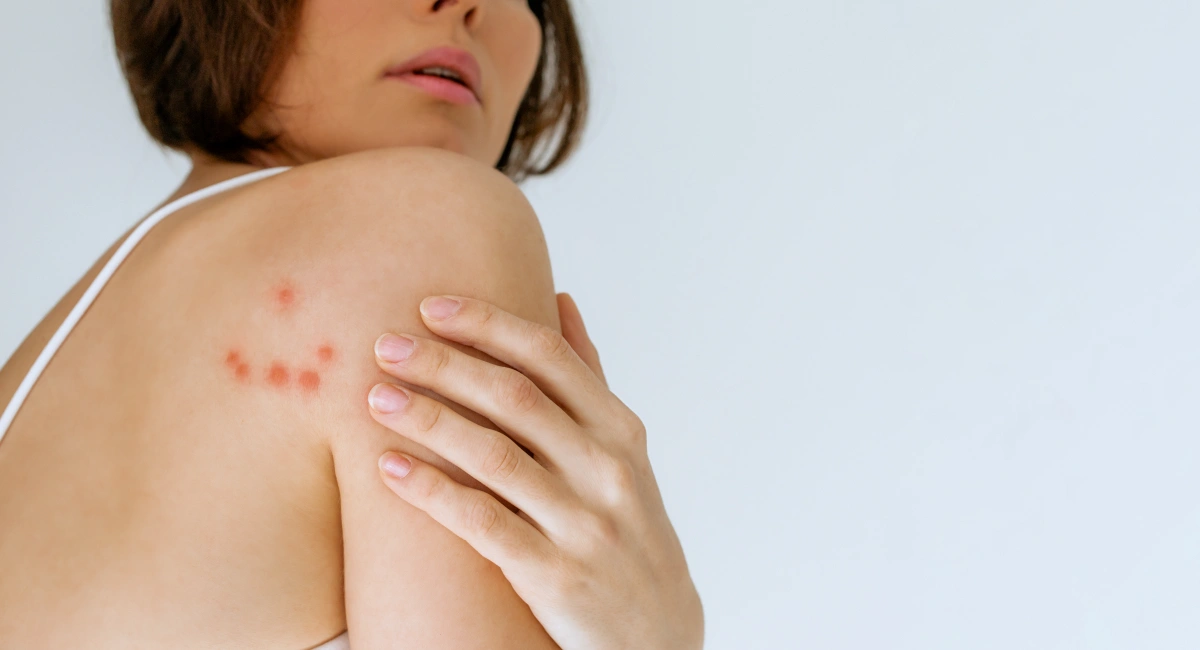
Bed Bug Bites
Bed bugs are nocturnal feeders. They inject a numbing agent when they bite, so you won't feel it right away. The bites themselves may not appear for hours or even up to two weeks, depending on your skin sensitivity. Some people show no reaction at all.
- Appearance — Small, red, swollen bumps that can look similar to mosquito bites. Often appear in a line or cluster on exposed skin.
- Location — Neck, face, arms, legs, hands, and torso and anywhere exposed during sleep. Bed bugs don't bite through clothing.
- Behavior — Bed bugs feed at night while you sleep, then retreat to hiding spots in mattress seams, bed frames, and baseboards.
- Risks — Not known to transmit disease, but excessive scratching can lead to secondary skin infections. Severe allergic reactions, including anaphylaxis, are possible. Seek immediate medical attention if this occurs.
Mosquito Bites
Mosquitoes are flying insects that bite to feed on blood, leaving behind itchy bumps that appear almost immediately. Unlike bed bugs, you will often feel a mosquito bite as it happens or notice the welt within minutes.
- Appearance — A single, round, raised bump that may look like a small pimple. Bites are typically scattered and random rather than clustered.
- Location — Any exposed skin, particularly arms, legs, and ankles. Mosquitoes are attracted to body heat, carbon dioxide, and sweat.
- Timing — Bites appear quickly, usually within minutes. Mosquitoes are most active at dawn and dusk, though some species bite during the day.
- Risks — Mosquitoes can carry serious diseases, including West Nile virus, Zika virus, and dengue fever. If you develop fever, headache, or other symptoms after a bite, consult a healthcare professional.
Signs of an Infestation
Bites alone don't always tell the full story. You need to look for physical evidence to confirm which pest you're dealing with.
Signs of bed bugs:
- Small blood stains or dark rusty spots on sheets and pillowcases
- A musty, sweet odor near sleeping areas
- Shed skins or tiny white eggs along mattress seams, bed frames, or baseboards
- Seeing a live bed bug which looks like a small, flat, and reddish-brown spec, about the size of an apple seed
Signs of mosquitoes:
- Buzzing sounds, especially at dawn or dusk
- Standing water in your yard, such as birdbaths, clogged gutters, plant saucers, or low-lying areas
- Increased biting activity when spending time outdoors
- Mosquito larvae visible in stagnant water
If you're unsure which pest you have, the safest move is to contact a professional.
Prevention Tips
Treating bites won't stop them from coming back if the underlying infestation isn't addressed. Here are some practical steps to help protect your home:
For bed bugs:
- Inspect luggage and hotel rooms when traveling. Bed bugs are skilled hitchhikers.
- Check secondhand furniture, mattresses, and clothing before bringing them indoors.
- Use mattress encasements to limit hiding spots.
- Reduce clutter around sleeping areas.
- Wash and dry bedding on high heat regularly.
For mosquitoes:
- Eliminate standing water around your property. Even small amounts can be a breeding site.
- Keep gutters clear and fill in low-lying areas where puddles form.
- Trim overgrown vegetation where mosquitoes rest during the day.
- Install or repair window and door screens.
- Use EPA-registered repellents when spending time outdoors.
Frequently Asked Questions
Both can appear as small, red, raised bumps, which makes them easy to confuse. The key differences are pattern and timing. Bed bug bites tend to cluster in lines, appear on skin exposed during sleep, and may take days to develop. Mosquito bites are typically single, scattered marks that appear within minutes.
Bed bugs are not known to transmit disease. However, their bites can cause significant itching, sleep disruption, and anxiety. In rare cases, severe allergic reactions can occur. If you experience unusual symptoms after a bite, consult a healthcare professional.
Look beyond the bites. Bed bug infestations leave physical evidence: blood stains, dark fecal spots, and shed skins near sleeping areas. Mosquito problems are linked to standing water and outdoor activity. If you're still unsure, contact us for a professional inspection, our technicians can identify the pest and recommend the right treatment for your home or business in the Carolinas.
DIY steps can help with mild cases, but they rarely stop the full pest life cycle. For ongoing problems, professional treatment is usually the most effective solution.
Book Your Free Pest Inspection Today
Our local technicians will assess your property and recommend tailored solutions. Fast, friendly, and completely obligation-free.
- Safe, targeted treatments
- Local experts, fast response
- Trusted, trained technicians