© 2026 Rentokil North America © Gregory Pest Solutions – All Rights Reserved.
Why These Spring Borers Target Carolina Homes
Spring arrives quickly across the Carolinas, and for many homeowners, one of the first signs isn't blooming azaleas or warming evenings. It's the unmistakable hovering of large black bees near the deck, the porch eaves, or the fascia boards along the roofline.
Carpenter bees are among the earliest seasonal pests to become active across North and South Carolina. They don't swarm or build visible hives. Instead, they bore into exposed wood to create nesting galleries, and often return to the same spots year after year.
By the time the signs become obvious, the repair bill has often grown well beyond the cost of early intervention. Knowing what draws carpenter bees to your home, and when to act, is the most practical step you can take this spring.
Carpenter Bee or Bumble Bee? How to Tell the Difference
One of the most common mistakes homeowners make is confusing carpenter bees with bumble bees. They're similar in size and color, but their behavior and habits are very different.
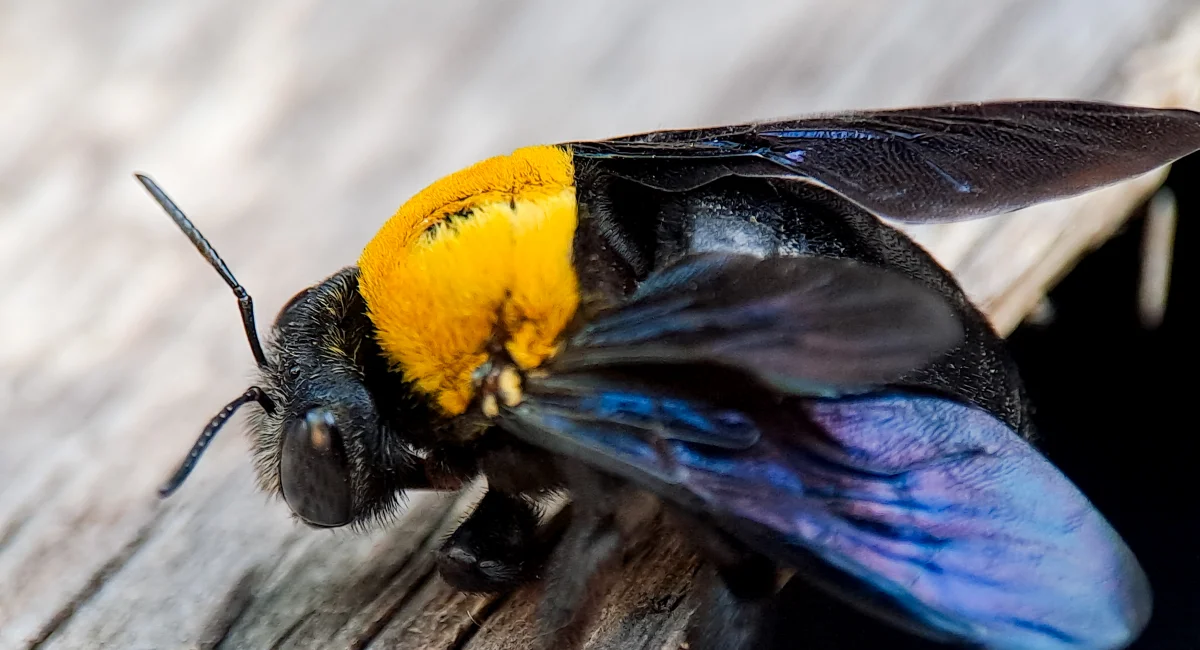
- Carpenter bees (Xylocopa virginica) are typically solitary and have shiny, mostly black abdomens. Males are territorial and hover aggressively near wooden surfaces, but can't sting. Females can sting but rarely do, and they are the ones responsible for the bore holes.
- Bumble bees, by contrast, are rounder and fuzzier, with yellow bands. They are social insects that nest in the ground or dense vegetation, and are generally uninterested in your home's structure.
If you're seeing perfectly round, dime-sized holes in exposed wood, that's a carpenter bee. They typically become active across the Upstate and Piedmont by late March as temperatures climb, and are frequently mistaken for bumble bees until the telltale openings appear
Why Carpenter Bees Target Carolina Homes
Carpenter bees are drawn to untreated, unpainted, or weathered softwoods, which are commonly found in decks, pergolas, porch railings, fascia boards, window trim, and eaves. Cedar, pine, and redwood are particularly attractive to them, especially when the wood has been softened by the Carolinas' volatile spring climate.
Several regional factors drive this seasonal activity:
- Rapid Temperature Swings: Spring is a transition season where warm, humid air from the Gulf of Mexico collides with lingering cooler air, pushing conditions from mild to the low 80s°F in a matter of days and triggering early bee activity.
- High Humidity: The moisture that defines March, April, and May across the Carolinas accelerates the weathering of exposed wood, making untreated surfaces even more inviting to boring insects.
- Geographic Vulnerability: Homes in older neighborhoods across Charlotte, Raleigh, and Columbia often feature original wood trim that sees consistent activity, while coastal properties in Wilmington and Charleston face the added pressure of salt air.
- Solar Exposure: South- or west-facing surfaces tend to attract the most attention, as these areas of the home warm up fastest during early spring warm spells.
Our technicians frequently find that homes with untreated deck joists are among the most heavily affected, often with multiple generations of galleries running through the same timber.
The Damage Most Homeowners Underestimate
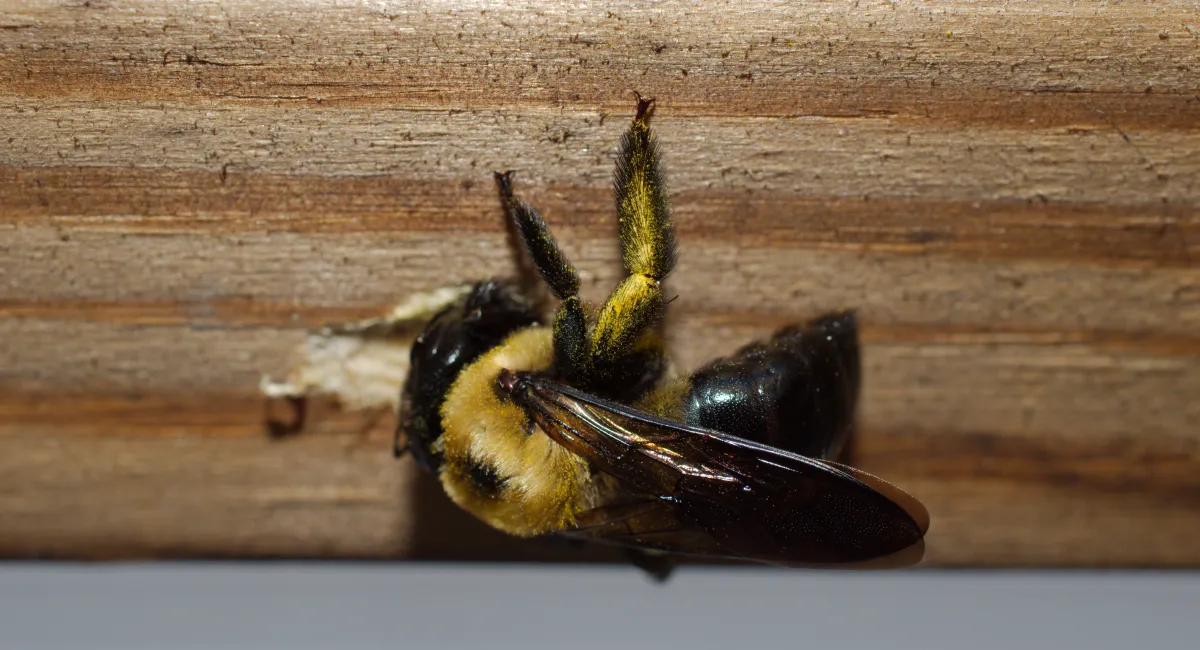
A single carpenter bee hole may not seem like much, but carpenter bees rarely stop at one. Each gallery can extend six to ten inches into the wood in a single season, and over several years of reuse, these tunnels can significantly weaken structural joists.
The entry holes also act as pathways for moisture, accelerating wood rot, which is a particular concern in the humid conditions common across the Midlands and Lowcountry. Homes with underlying moisture issues in crawl spaces or around the roofline are at even greater risk, as damp wood deteriorates faster once carpenter bees have opened it up. The decay and larvae inside the tunnels then attract woodpeckers, which often cause additional, sometimes dramatic, surface damage.
The result is a chain reaction: openings invite moisture, moisture invites decay, and decay invites further pest activity. Blocked or poorly maintained gutters aggravate the problem by keeping fascia and eaves saturated, making effective gutter protection an often-overlooked first line of defense against wood-boring pests. By the time damage is visible from the outside, the internal structure may already be compromised.
What Homeowners Can Do: Practical Prevention Steps
There are several steps you can take to make your home less attractive to carpenter bees this spring:
- Paint or stain exposed wood. Carpenter bees prefer bare, untreated wood. A solid coat of exterior paint is one of the most effective deterrents: particularly important for homes in areas like Greer, Spartanburg, and the Piedmont, where older properties often have significant amounts of exposed softwood.
- Seal existing holes. After confirming the gallery is no longer active (typically in autumn), fill openings with steel wool and wood putty to discourage reuse.
- Inspect early and often. Walk your property in late March and April, paying close attention to eaves, deck joists, railings, and fascia boards for fresh sawdust or new holes.
These measures can reduce the likelihood of new activity, but they're most effective as part of a broader approach, especially if carpenter bees have already established galleries on your property. Gregory Pest Solutions' residential pest protection plans provide year-round coverage that accounts for seasonal threats like carpenter bees, so prevention doesn't fall through the cracks between seasons.
Why DIY Approaches Often Fall Short
Many homeowners try to manage carpenter bees with over-the-counter sprays, hanging traps, or home remedies like citrus oil or almond extract. While some of these may deter individual bees temporarily, they rarely have lasting results.
Carpenter bee galleries run deep into the wood, and surface-level treatments often don't reach the larvae developing inside. Traps may catch a few adults, but won't prevent new females from boring into untreated wood nearby. Since carpenter bees return to the same nesting sites each spring, a partial solution this year usually means the same problem, or worse, next year.
Effective long-term management typically requires treating active galleries directly, sealing entry points at the right time, and applying targeted preventive treatments to vulnerable wood surfaces. That's where professional support makes a meaningful difference. Our bee and wasp control services are designed to address stinging insects safely and thoroughly, including carpenter bees that have established nesting patterns on your property.
Protect Your Home Before the Damage Adds Up
Carpenter bees are a predictable spring challenge in the Carolinas, and that predictability is actually an advantage. Knowing when they arrive, where they nest, and what attracts them gives you a real window to act before the damage gets worse.
If you're noticing signs of carpenter bee activity around your home this spring, a conversation with a pest management professional is a practical next step. Gregory Pest Solutions is here to help you find the right path forward. Schedule a free inspection to get started.
If you need a professional set of eyes to assess your spring landscaping before ant season kicks into high gear, schedule your free inspection today, and we'll make sure your curb appeal doesn't come with uninvited guests.
Book Your Free Pest Inspection Today
Our local technicians will assess your property and recommend tailored solutions. Fast, friendly, and completely obligation-free.
- Safe, targeted treatments
- Local experts, fast response
- Trusted, trained technicians