© 2026 Rentokil North America © Gregory Pest Solutions – All Rights Reserved.
The unsettling sound of buzzing insects overhead can quickly lead to feelings of panic and fear. No one wants to be stung by a bee or wasp; but how bad is the pain compared to other types of stinging insects? Believe it or not, it could be much worse.
Did you know there’s a scale that measures stinging insect pain? It’s called the Schmidt sting pain index and it was developed by Justin Schmidt, an Arizona entomologist whose research led him to be stung by over 150 different venomous creatures, giving us a better understanding of just how painful insect stings can get. As you prepare for your summer picnics, sporting events and outdoor adventures, let’s look at where common flying insects that sting rate on the scale and see what insect has the most painful sting.
Why Do Insect Stings Hurt?
It may be helpful to begin by understanding what happens when an insect stings you and how your body responds. Insect stings hurt primarily because of the venom they inject into your tissue. This venom often contains a mix of bioactive compounds, including proteins, peptides, and other molecules that can break down cell membranes, cause inflammation, and trigger pain receptors.
For example, bee venom contains a peptide called melittin. It lyses, or breaks apart, cell membranes, causing cells to spill their contents, which leads to a series of immune responses. Even worse, venom from some ants contains poneratoxin, a peptide that interferes with the ability of nerve cells to send electrical signals. This causes intense pain, as the toxin essentially causes the nerves to fire uncontrollably.
The pain from a sting not only serves as a deterrent to potential predators or threats, but it also gives the insect time to escape. In most cases, you’ll experience pain for a short 5-10 minute period along with some swelling or inflammation. These side effects are the result of your body’s immune response as it rushes blood and immune cells to the area to neutralize and eliminate the venom.
%20(1).2023-10-31-18-55-08.webp)
How the Insect Sting Pain Index Works
While it is subjective, the Schmidt index is regarded as a valid measurement and a good way to gauge the most painful insect stings. Schmidt breaks stings down into five levels from zero (no pain) to four. He also embellishes each quantified response with a colorful description such as “the debilitating pain of a migraine contained in the tip of your finger.” Here’s how each pain level breaks down:
Level One
Level one stings are mild like those of a mosquito or a fire ant. The pain from these stings typically lasts less than 5 minutes. Schmidt compares it to a spark singing a single hair on your arm.
Level Two
Schmidt uses a honey bee sting as the basis of level two pain. It’s more intense but not severe. Yellow jackets and bald-faced hornets are other common insects whose stings measure at this level. Pain from these stings typically lasts between 5-10 minutes. “Imagine W. C. Fields extinguishing a cigar on your tongue.”
Level Three
Pain at level three can last from minutes to a half hour. It usually is due to venom with the polypeptide, kinin, which is commonly found in wasps such as the red paper wasp and Klug’s velvet ant (a type of wingless wasp). The sting of some ants also registers at level three such as the Australian giant bull ant and the Maricopa harvester ant which is found in the Southwestern United States.
Level Four
Intense pain that can last for hours or days due to extremely toxic venom. Only a few insects that sting leave level four pain. Among these is the tarantula hawk – a type of wasp that paralyzes tarantulas and then lays its eggs on them so that the hatchlings can feast on the immobile body. Schmidt describes pain at this level as “a running hair dryer has been dropped into your bubble bath"
The World’s Most Painful Insect Sting
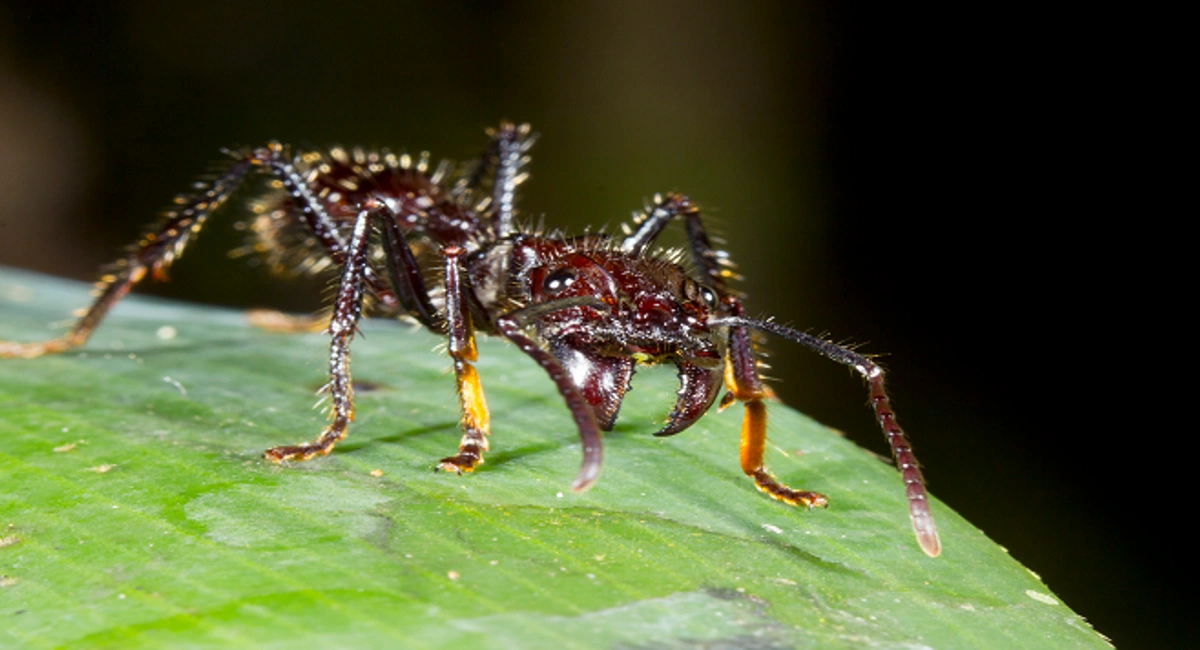
The Most Painful Ant Sting
The honor of the most painful sting of them all goes to the bullet ant, which Schmidt classified as a 4+. Named because its sting feels as though you’ve been shot, Schmidt describes the experience as “pure, intense, brilliant pain. Like walking over flaming charcoal with a three-inch nail embedded in your heel.” The venom from a bullet ant can cause muscle contractions, a burning sensation and intense pain for 24 hours or more.
Fortunately these large ants live in the rainforests of South and Central America and are not a problem homeowners in the U.S. need to worry about. If you’re traveling in these areas though, be careful. While they may not be aggressive, a bullet ant sting could make your trip miserable for a day or two.
The Most Painful Bee Sting
Less fortunately, the bee with the most potent sting is pretty common. The western honeybee is the most common of all honeybee species, and packs a sting that scores solid two on the Schmidt scale. “Burning, corrosive, but you can handle it. A flaming match head lands on your arm and is quenched with lye and then with sulphuric acid.”
The Most Painful Wasp Sting
Second only to the bullet ant, the tarantula hawk wasp is a firm four on the scale. These large insects are usually docile, but their venom – capable of paralyzing a tarantula spider – is delivered deep by a long sting and causes intense pain in humans. Unlike bullet ants, these wasps can be found in the United States, particularly in Southwestern desert areas.
Stinging Insect Control
You may be relatively safe from level four pain but the worst insect stings of summer are still no fun. Wasps, bees and hornets along with certain types of ants can make life unpleasant for anyone.
If you have paper nests, hives or swarms of stinging insects wreaking havoc around your home or business, don’t put yourself in the front line. Call a professional. The licensed technicians at Gregory have the equipment and training to remove nests and eliminate stinging insects near you. Our pros can also identify environmental factors that are attracting these pests and help you prevent future swarms from appearing.
If you’re interested in starting a beehive, we offer services to set up and maintain a hive on your property. Our team will provide all the materials along with monthly checks. You benefit from a new source of pollinators to help promote growth and diversity in your garden and you help restore these endangered insects to local habitats.
Call Gregory or contact us online. Our friendly team will dispatch one of our experts to your property as soon as possible. Get fast and effective relief from stinging insects today. We’d like to keep your pain at a level zero.
Frequently Asked Questions
The most common bees and wasps have similar pain profiles, around two on the scale. However, there are a few wasps (warrior wasps and tarantula hawk wasps) that can be found in the United States that score a four. Stings from these insects can be extremely unpleasant.
Most of the stinging insects found in the Carolinas score no more than two on the Schmidt scale. However, tarantula hawk wasps can sometimes be found in the area and can be easily confused with other insects such as Mydas flies and great black wasps.
The insect with the most painful sting in the United States is once again the tarantula hawk wasp. The warrior wasp isn’t far behind, with both scoring four on the scale. Worthy of note too is the Arizona bark scorpion is capable of causing extreme pain lasting up to 72 hours.
The sting from a velvet ant is said to be painful enough to kill a cow. While that’s a myth, they do pack an excruciating sting. And to dispel another myth – in spite of their name, they’re actually a type of wasp. The wingless, furry females resemble red ants, hence the confusion.
Book Your Free Pest Inspection Today
Our local technicians will assess your property and recommend tailored solutions. Fast, friendly, and completely obligation-free.
- Safe, targeted treatments
- Local experts, fast response
- Trusted, trained technicians