800-922-2596 Call Now Book a Free Inspection

Hornet Control and Removal

Hornets are some of the largest and most intimidating stinging insects you might find around your home or business. Their size, loud buzzing, and painful sting can quickly make outdoor areas feel unsafe. Hornets often nest in trees, attics, or wall spaces, and removing them safely is difficult without expert help. Learning how to identify hornets, recognize signs of a nest, and follow a proper control plan can help keep your property safe and reduce risks.

Gregory Pest Solutions offers expert hornet pest control throughout the Southeast, providing customized residential and commercial hornet control services designed to eliminate colonies and prevent their return. Our team knows how to identify each species accurately and uses environmentally responsible strategies to handle infestations efficiently and carefully.

Color: Brown to black with yellow or white markings, depending on the species. Some, like the European hornet, have a reddish-brown head and thorax with yellow abdominal bands.

Legs: 6

Shape: Large, robust body with a distinct, narrow waist and a rounded abdomen. The head is broad with strong mandibles, and the wings are long and translucent.

Size: Typically ¾ to 1½ inches (18–38 mm), though queens can be larger.

Antennae: Elbowed with 12 segments in females and 13 in males.

Region: Common throughout the eastern United States, especially in wooded or suburban areas. European hornets are widespread in the Southeast and Mid-Atlantic regions, while bald-faced hornets are found across most of North America.
What is a Hornet?

Hornets are stinging insects that are members of the wasp family. They are distinguished by their larger size and aerial nests vs the nests in the ground that most wasps make. They may also have a red or orange coloring rather than the traditional yellow and black. While hornets aren’t generally as aggressive as other wasps, hornet nest removal is best handled by a pest control professional.

The general name hornet is frequently misused for just about any species of large, ferocious looking and stinging insect. Most people use the term “hornet” to designate both bald-faced hornets and the European hornets, even though the European hornet is a true hornet and the bald-faced hornet is actually in the same insect group as yellowjackets.

Common Hornet Species in the U.S.

There are approximately twenty different species of true, known hornets worldwide, but only one of them lives in the United States: Vespa crabo, otherwise known as the European hornet. As its common name suggests, the European hornet is an introduced species to the U.S. from Europe. Other species of wasps that are mistakenly called hornets include the bald-faced hornet, the mud dauber,  the ground hornet and the yellowjacket.

  • The European hornet – the only true American hornet – ranges between 1 and 1.5 inches in length with two pairs of wings and three pairs of legs. Their coloring is reddish-brown for the most part, with darker brown shades in between the head, thorax, abdomen, and legs. Their nests are distinctive, made from paper-like material that they create by mixing their saliva with fibers that workers gather for the queen. Their colonies can lead to the development of hundreds of new eggs per season, and each egg then goes through the process of becoming adults over a short amount of time.

  • Bald-faced hornets are named for the white markings on their face. Their bodies are typically darker and may have yellow or white stripes. While larger in size, bald-faced hornets are actually wasps and similar to yellowjackets. They build papery nests like the European hornet and can become aggressive when threatened.

  • Mud daubers are wasps that construct their nests out of mud. Their homes can either look like small piles with tunnel openings or long mud tubes. Mud daubers are less aggressive than other varieties of wasp.

  • Ground hornets are actually digger wasps. These insects burrow deep into the ground and are sometimes called “cicada killers” because they hunt and kill cicadas for food.

  • Yellowjackets are your stereotypical wasp. They have distinctive yellow and black markings and can be aggressive towards humans. Yellowjackets build their nests underground.

Are Hornets Dangerous to People and Pets?

When a hornet feels threatened, it releases an attack pheromone that will draw other hornets nearby to mobilize a defensive attack. This can also happen if a hornet is cleaned near its nest. Just like wasps, they have smooth stingers which make them capable of making multiple painful stings without any harm coming to themselves. Also like wasps, they aren’t inherently aggressive unless they feel that their nest is threatened, but due to both the attack pheromone and their especially defensive nature, it means that you need to take their potential threat seriously, especially if you’re allergic and susceptible to anaphylaxis.

Struggling with Hornets?

Call now to book your free inspection.

Why Do I Have Hornets in My Yard or Home?

Hornets are most active in the evening. If you notice a single hornet buzzing around any part of your home, it’s likely that you have a characteristic paper mache looking nest nearby. The main thing that draws their kind to your home or business is access to readily available sweets like berries, fallen fruits, or the residue that can build up inside of improperly cleaned recycling or garbage bins.

How To Identify Hornets

Correctly identifying hornets is crucial for selecting the most effective treatment method. Hornets can resemble large wasps or yellowjackets, but there are distinct features that help distinguish them.

Hornets are usually bigger than other stinging insects, often more than an inch long. European hornets have reddish-brown coloring, while yellow jackets are bright yellow and black. Bald-faced hornets are black with white or ivory faces and are often seen because of their large nests hanging from trees or buildings.

Hornet nest identification is easy to do. They look papery and have a smooth outside with one entrance hole. Bald-faced hornets build round nests that can be over a foot wide, while European hornets usually nest in hidden places like hollow trees or wall spaces, so their nests are harder to find.

If you’re uncertain whether you’re dealing with a wasp nest or a hornet nest, avoid disturbing it. Photographing the nest from a safe distance can help a hornet exterminator identify the insect species and recommend the appropriate control measures.

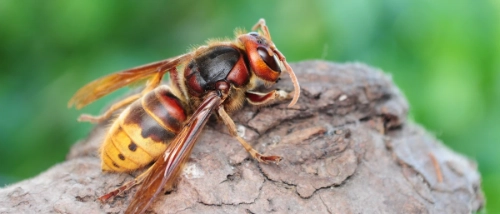
european hornet on rock, side view

Common Signs of a Hornet Infestation

Hornet activity typically begins in late spring and continues through early fall. The most obvious sign of a hornet infestation is the presence of a visible nest or frequent hornet sightings around your home or yard. You may also notice hornets flying in and out of cracks, vents, or wall openings, which may indicate a hidden nest inside your structure.

You might also notice chewed wood on fences, decks, or siding, as hornets use this to build their nests. Hearing steady buzzing in walls or under eaves can mean a colony is nearby. Since hornet colonies grow fast, finding them early helps prevent bigger problems later.

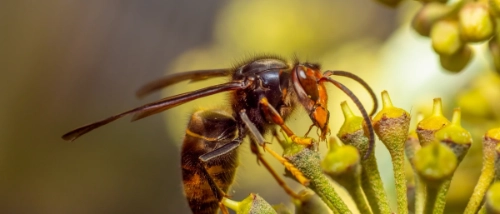
asian hornet on ivy plant, side view

How Can I Prevent Hornets from Nesting?

To prevent hornets from nesting, you should reduce places where they can nest and find food. For example:

  • Ensure garbage cans are properly sealed
  • Close off any potential entry points to your home
  • Prune overburdened fruit trees
  • Consider replacing white exterior lights with yellow bulbs
  • Keep on top of cleaning any sugary spills
  • Maintain a tidy yard to limit other insects
  • Fix damaged siding or soffits

If you think hornets are present, don’t try to handle them yourself. Spraying or knocking down nests can make the hornets attack and lead to more stings. It’s much safer and more effective to call a professional hornet control service.

asian hornet on ivy bud

How Can Gregory Pest Remove Hornets from My Home or Business?

Don’t attempt to deal with a wasp nest on your own. An expert exterminator from Gregory Pest Solutions will be your full-service pest solutions provider specializing in the effective removal and extermination of hornets and their nests.

One of our technicians will formulate an environmentally friendly plan for the removal and prevention of hornets from your property. Once we implement our plan, our experts will remove accessible nests so your family or customers can enjoy your outdoor spaces without the fear of painful stings. Trust our hornet removal professionals to do the job right.

Other Types of Stinging Insects

Frequently Asked Questions

Yellow jackets are smaller insects and will always have distinctive yellow and black coloring. Hornets are larger and tend to have reddish or brown coloring.

Both insects make hanging paper nests. Wasp nests are gray colored and cone shaped. They have a single outer layer that is more flimsy. Hornet nests are pear shaped and can be gray to brown in color. They have a thicker outer layer and are often built in higher areas like tree tops and utility poles.

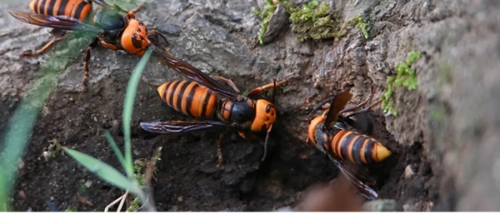
Murder hornets are a variety of invasive Asian hornet that have recently been identified in America’s Pacific Northwest. These hornets can grow up to two inches long and are notorious for killing and beheading populations of bees. Their stingers are longer and can cause a deep, painful sting in humans. In Japan they kill an average of 50 people per year.

Bald faced hornets are not actually hornets at all but a type of wasp that is similar to a yellow jacket. They can be easily distinguished by the white markings on their face and sometimes bodies. Hornets typically have red or brown markings instead of yellow or white.

Yes. While a single sting is moderately painful for a few minutes, hornets can sting multiple times and, when threatened, will attack in masses.

There are a variety of hornet baits, traps and sprays available commercially. While many of these are effective, you put yourself in the line of fire when addressing your hornet problem on your own. You also risk the chance of returning pests. As with all stinging insects, hiring an experienced pest control expert is your best bet.

Where Can I Get Professional Hornet Control?

If you’re looking for residential and commercial hornet control services or help with other stinging insects throughout the southeastern U.S., look no further. Gregory Pest Solutions offers safe and effective removal of insects and nests. You’re a simple call away from the hornet prevention and removal help you’re seeking in South Carolina. Let our experts handle your hornet problem.

Our technicians travel wherever they’re needed in ready-to-go, completely stocked trucks. Get in touch the next time you’re in need of hornet removal and we’ll be there ASAP.

Get In Touch

About Us

The personal touch sets Gregory apart from other companies. We have been family owned and locally operated since 1972. We get to know you, your family and home.