© 2026 Rentokil North America © Gregory Pest Solutions – All Rights Reserved.
Quick Comparison: Drywood Termites vs. Subterranean Termites
- Drywood termites live entirely inside the wood they eat, no soil contact needed. They're common in attics, window frames, and furniture.
- Subterranean termites live underground and travel through mud tubes to reach wood. They're the most destructive termite species in the U.S.
- Drywood termites leave behind frass which are tiny, pellet-shaped droppings, as a key sign of activity.
- Subterranean termites build mud tubes along foundations and walls to protect themselves as they travel.
- Termites cause billions in property damage across the U.S. every year, and most homeowner insurance policies don't cover it.
The Difference Between Drywood Termites and Subterranean Termites
Drywood termites and subterranean termites are very different in how they live, where they nest, and how they spread through a structure. Getting the identification right matters because the treatment approach for each is completely different. Our residential termite treatment services are tailored to the specific species found on your property.
Drywood Termites
Drywood termites don't need soil to survive. They live, feed, and nest entirely within the wood they infest, which makes them harder to detect and easier to spread through infested furniture or building materials.
- Appearance — Creamy white to light brown workers, about ¼ to ⅜ inch long. Swarmers (reproductives) are darker with two pairs of equal-length wings. Their wings have a distinctive pattern of three heavy veins near the front edge.
- Habitat — Found inside dry, sound wood, attic framing, window and door frames, hardwood floors, and wooden furniture. They don't need ground contact and can infest upper floors of a structure.
- Behavior — Drywood termite colonies are smaller than subterranean colonies, typically numbering in the thousands rather than millions. They spread slowly but can go undetected for years. Swarmers emerge in warm months to start new colonies.
- Risks — Drywood termites hollow out wood from the inside, leaving a thin outer shell that can suddenly collapse. They're particularly damaging to older homes with exposed wood framing. Severe infestations may require whole-structure fumigation to fully address.
Subterranean Termites
Subterranean termites are the most destructive termite species in North America. Their large colonies, aggressive foraging behavior, and ability to attack a structure from multiple points make them a serious threat to any property in the Carolinas.
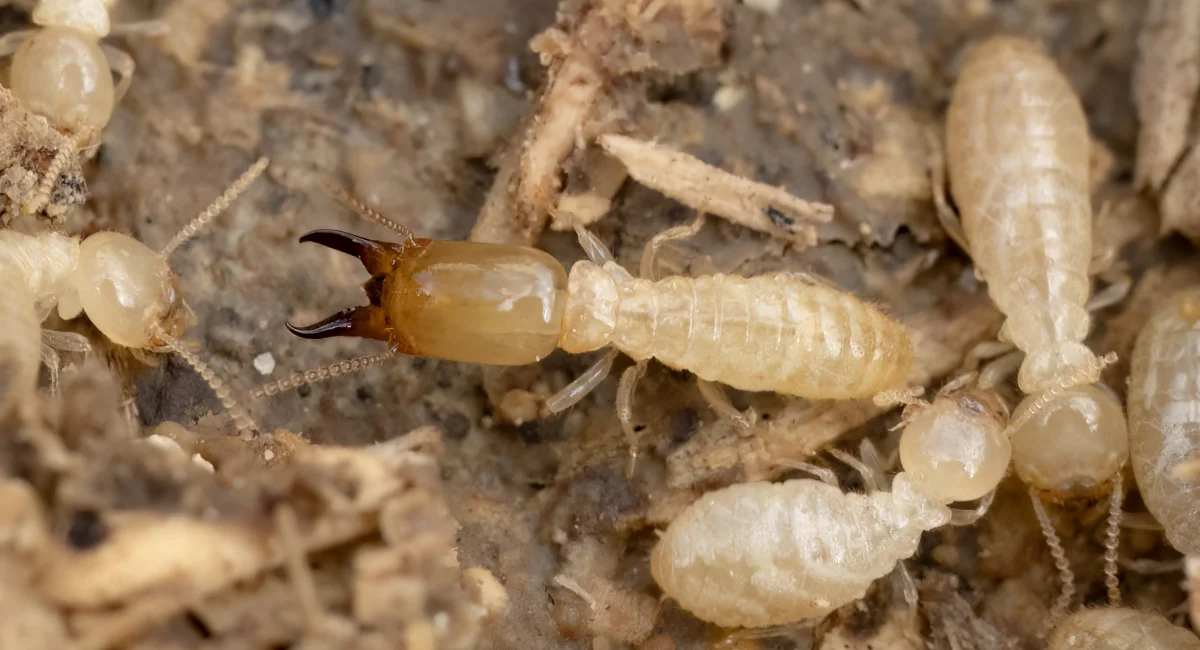
- Appearance — Workers are pale, soft-bodied, and about ⅛ inch long. Soldiers have large, rectangular heads with powerful mandibles. Swarmers are dark brown to black with two pairs of equal-length wings that they shed after mating.
- Habitat — Live underground in the soil, building extensive tunnel networks. They require moisture to survive and are commonly found near foundations, crawl spaces, and areas with wood-to-soil contact. They build distinctive mud tubes to travel above ground.
- Behavior — Subterranean termite colonies can contain hundreds of thousands to millions of workers. They forage continuously and can attack a structure from multiple entry points simultaneously. They are active year-round in the Carolinas' warm climate.
- Risks — Because they attack from below and within walls, subterranean termites can cause extensive structural damage before any visible signs appear. A mature colony can consume a significant amount of wood in a short period. Our commercial termite control services are designed to address the scale of damage subterranean termites can cause in larger buildings.
Signs of an Infestation
Signs of drywood termite activity:
- Small piles of frass—tiny, six-sided, pellet-shaped droppings—near wood surfaces, windowsills, or below infested furniture
- Hollow-sounding wood when tapped, even in areas that appear undamaged on the surface
- Discarded wings near windows, doors, or light fixtures following a swarm
- Small, round kick-out holes in wood where termites push frass out of the gallery
Signs of subterranean termite activity:
- Mud tubes running along foundation walls, floor joists, or support columns, about the width of a pencil
- Wood that sounds hollow or feels soft and spongy when pressed
- Discarded wings near ground-level entry points, especially after a spring swarm
- Bubbling or uneven paint on walls, which can indicate moisture from termite activity within
Termite damage compounds over time, and early treatment is always less disruptive and less costly than addressing an established infestation. Our technicians serve homes and businesses across the Carolinas and can help you identify exactly what you're dealing with.
Prevention tips
Reducing your termite risk starts with making your property less attractive to both species.
Proactive property maintenance:
- Eliminate wood-to-soil contact around your home and keep mulch, firewood, and lumber away from the foundation.
- Fix leaks and improve drainage around the foundation; subterranean termites are drawn to moisture.
- Seal cracks and gaps in the foundation, roofline, and around utility penetrations to limit entry points for drywood termites.
- Keep gutters clear and ensure downspouts direct water away from the structure.
- Inspect attic framing, crawl spaces, and wooden decking regularly for early signs of activity.
If you're seeing any signs of termite activity or haven't had a professional inspection recently, we highly recommend giving us a call. You can also learn more about how termites compare to other wood-destroying insects in our guide to carpenter ants vs. termites.
Frequently Asked Questions
The main difference is where they live. Drywood termites nest inside the wood they eat and don't need soil contact. Subterranean termites live underground and travel through mud tubes to reach wood. They also differ in colony size, signs of activity, and treatment methods.
Subterranean termites are generally considered more destructive because their colonies are much larger and they can attack a structure from multiple points at once. That said, drywood termites can cause serious damage too, especially in older homes, and are harder to detect early. Both warrant professional attention.
Both have two pairs of equal-length wings, which distinguishes them from ants. Drywood swarmers tend to be lighter in color with a distinctive vein pattern on their wings. Subterranean swarmers are typically darker, dark brown to black. Wing color and body size can help with identification, but a professional inspection is the most reliable way to confirm the species.
Termites don't stop at residential properties. Our commercial termite control services are designed for businesses of all sizes, from warehouses and restaurants to office buildings across the Carolinas.
Book Your Free Pest Inspection Today
Our local technicians will assess your property and recommend tailored solutions. Fast, friendly, and completely obligation-free.
- Safe, targeted treatments
- Local experts, fast response
- Trusted, trained technicians