800-922-2596 Call Now Book a Free Inspection

The old house borer (Hylotrupes bajulus) is a tricky wood-destroying beetle that can infest both homes and commercial buildings. Even though its name suggests otherwise, it often appears in both new and old buildings. 

If you notice oval holes in your wood, hear faint scraping sounds from inside your walls, or find piles of fine, powdery dust near wooden beams, it’s a good idea to get a professional inspection. Our team at Gregory Pest Solutions has experience finding and treating old house borer problems throughout the Carolinas.

Quick Facts About the Old House Borer

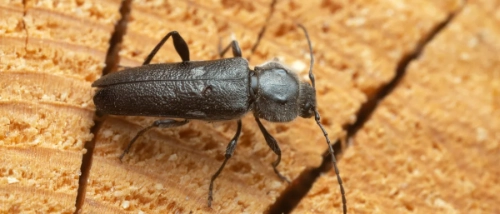
  • It’s a type of longhorn beetle. Old House Borers (Hylotrupes bajulus) belong to the cerambycid family and are usually ¾ to 1¼ inches long. They have grayish-black bodies with white hair patches on their wing covers.
  • It's the larvae that do the damage. Adult beetles don't cause structural damage, but the larvae tunnel through seasoned softwood such as pine and spruce for years before they emerge.
  • The larvae have a long development cycle. They can live inside wood for three to twelve years before maturing, so an infestation might go unnoticed for a long time.
  • They actually prefer newer wood. Despite their name, Old House Borers are more likely to infest wood in homes less than ten years old, especially structural timbers and roof framing.
  • Look for oval exit holes as a sign. Adult beetles exit through oval-shaped holes about ¼ to ⅜ inch wide and often leave behind fine, powdery frass that looks like sawdust.
  • Tapping sounds can be a giveaway. You might hear active larvae making a ticking or rasping noise inside infested wood, especially at night when it's quiet.


closeup of dry rot fruiting body

What Are Old House Borers?

Old house borers are a type of longhorned beetle in the family Cerambycidae. They can fly well, but you probably won’t see them, since adults are rarely out and usually only appear between June and August. Real damage is done by the larvae. After hatching from eggs laid in cracks and crevices of exposed wood, the grub-like larvae bore deep into softwood timber and feed for years before emerging as adults.

Old house borers only go after softwoods like pine, fir, and spruce, which are often used in framing, roof trusses, joists, and beams. They do not infest hardwoods such as oak or maple.

Seeing Old House Borers?

Call now to book your free inspection.

Habitat, Diet, Life Cycle, and Behaviors

Understanding where Old House Borers live, how they behave, and knowing their lifecycle is crucial to catching them before they create extensive damage to your property.

Old house borers are most common in the eastern United States, especially along the Atlantic Seaboard. The Carolinas often see infestations. These pests like damp, poorly ventilated places where wood stays moist, such as crawl spaces, attics, and unfinished basements.

Infestations often start before anyone moves into a building. Sometimes, larvae are already in the lumber when it arrives at the construction site, having moved in during milling, processing, or storage. Once inside, they can stick around for several generations if the conditions are right.

Larvae eat the sapwood, which is the outer, protein-rich part of softwoods like pine, fir, and spruce. As wood ages and dries out, it loses protein, so infestations usually occur in buildings less than 10 years old. However, old house borers can return to older wood if it stays moist enough for them to develop.

There are four life stages in their development:

  1. Eggs — Female beetles lay 50 to 200 eggs in cracks and joints between wood members. Eggs hatch within a few weeks.
  2. Larvae — Tiny larvae bore into the wood and begin feeding. They grow slowly, tunneling deeper and causing progressively more damage over three to six years (or longer).
  3. Pupae — Mature larvae tunnel toward the wood surface and pupate near the outer layer.
  4. Adults — Adults chew through the surface, leaving an oval exit hole, and emerge between June and August. They live only a few weeks — just long enough to mate and lay eggs.

Old house borers are solitary and secretive, spending most of their lives hidden inside wood. Larvae are active year-round, feeding and tunneling slowly — sometimes for years. Adults emerge in summer to mate and lay eggs. A faint ticking or rasping sound from walls or timbers can be a sign of active larvae feeding inside.

How to Get Rid of Old House Borers

Old house borer larvae live deep inside the wood, so surface sprays and store-bought products can’t reach them. The best way to find out if you have an active infestation and what treatment you need is to get a professional assessment.

At Gregory Pest Solutions, our technicians will inspect the affected areas, assess the damage, and recommend appropriate action. Depending on the severity, treatment options may include:

  • Wood replacement — For localized infestations, removing and replacing affected boards is often the most practical solution.
  • Moisture control — Reducing wood moisture levels below 10% can stop larval development and break the cycle of reinfestation. This may involve improving ventilation, installing vapor barriers, or addressing drainage issues.
  • Professional treatments — For widespread or hard-to-access infestations, our technicians can recommend professional-grade treatment options suited to the specific situation, including structural fumigation where appropriate.

The main thing to remember is that old house borers cause damage slowly. There’s no need to panic, but it can be serious, and early intervention is crucial.  A professional inspection will find the root cause and explain your options to achieve the best results.

For both residential pest control and commercial pest control, our team is ready to help.
 

Frequently Asked Questions

The most visible sign is oval exit holes, roughly ¼ to ⅜ inch wide, on the surface of softwood timber. You may also find fine, powdery frass nearby. Inside the wood, larval tunnels often have a distinctive rippled appearance. In severe cases, structural timbers can be hollowed out, leaving only a thin outer layer.

No. Old house borers do not bite people or pets. They are not a health risk. The main concern is that their larvae can cause serious damage to softwood timber over time.

Both are wood-boring beetles, but they go after different types of wood. Old house borers attack softwoods like pine and spruce, while powderpost beetles usually prefer hardwoods. Old house borers leave larger, oval exit holes (¼ to ⅜ inch), while powderpost beetles make smaller, rounder holes. The frass from old house borers is coarser and looks like pellets, while powderpost beetle frass is finer and more like flour.

For small, local problems, taking out and replacing damaged wood is often enough. For larger infestations, professional treatments such as moisture control or, in some cases, structural fumigation may be needed.

The larvae live deep inside the wood, so surface DIY treatments rarely reach them. Some preventive steps, such as improving ventilation, lowering moisture, and sealing exposed wood, can help prevent reinfestation, but they won’t fix an existing problem.

Get In Touch

About Us

The personal touch sets Gregory apart from other companies. We have been family owned and locally operated since 1972. We get to know you, your family and home.