© 2026 Rentokil North America © Gregory Pest Solutions – All Rights Reserved.
Big black ants are common in homes and businesses across the Carolinas during spring and summer when warm, humid conditions drive them indoors. Carpenter ants are the most active species in this region and are both aggressive and destructive; therefore, they should be handled with care. However, they’re not the only ant species bothering residents, and property owners can find themselves battling successive infestations over a long period.
Since not all big black ants are the same and require different treatments, it can be challenging to get rid of them without proper identification. Of genuine concern to site managers in foodservice, healthcare, or property management is the risk of health code violations or customer complaints due to an active infestation. This guide explains how to identify big black ants, what attracts them, and suggests home remedies that can provide temporary relief.
Types of Big Black Ants
When residents in North or South Carolina mention ‘big black ants,’ they’re usually talking about ants that are larger than the typical nuisance species found on your countertop or pantry floor. Some of the more common species include:
- Carpenter ants (Camponotus spp.): These are among the largest ants found in the U.S., measuring ¼ to ½ inch. They are dark black or black with reddish tones and nest in wood, both outdoors and indoors.
- Odorous ants (Tapinoma sessile): These ants are smaller than carpenter ants (about ⅛ inch long), but may still be confused for larger ants when seen in large numbers. When crushed, they give off a strong, rotten coconut-like smell, hence their name.
- Field ants (Formica spp.): Also known as wood ants or mound ants. Field ants are slightly smaller than carpenter ants and build nests outdoors in soil, decaying logs, or under rocks. Although mainly found in fields, woodlands, and gardens, they may enter buildings to forage for food.
- Black crazy ants (Paratrechina longicornis): These ants are hairy and move erratically, with long legs and antennae. They’re about ⅛ inch long and spray formic acid to defend themselves and attack prey.
- Acrobat ants (Crematogaster spp.): These small to mid-sized ants are known for raising their heart-shaped abdomen when disturbed. They are omnivores that feed on insects and honeydew, and usually nest in dead or moist wood or in foam insulation.
Because many species can appear similar at a glance, especially to untrained eyes, proper identification by a trained technician is crucial. This is even more critical in commercial spaces where food safety regulations or structural concerns can come into play.
Ants with Big Heads: What Are Bighead Ants?
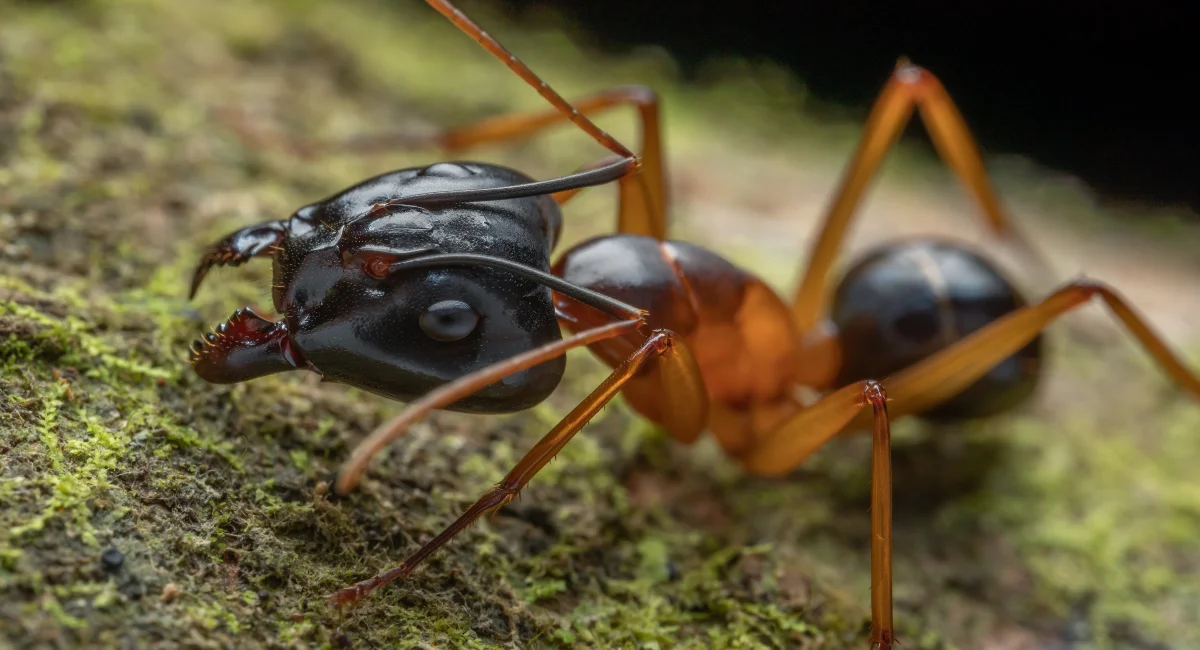
It’s hard to miss bighead ants (Pheidole spp.) with their odd, oversized heads. They are a distinct species, so-called for the noticeably large, dark heads of major worker ants, which are used to crush seeds or defend the colony. Minor worker ants have proportionally normal-sized heads. Their colonies can be large, with multiple queens (polygynous), and numerous interconnected nests, which means they can rapidly spread in high-traffic areas, such as multi-unit housing, retail stores, storage units, and restaurants, potentially leading to contamination concerns or product loss.
Bighead ants primarily nest in disturbed soils, lawns, and garden beds, or under objects such as rocks, logs, pavers, and concrete slabs, creating piles of excavated soil near nest entrances. They establish foraging trails and can create debris-covered tubes along the ground or up structures, which can sometimes be mistaken for subterranean termite activity. These striking ants feed on dead insects, small invertebrates, seeds, and honeydew from sap-sucking insects, like aphids. However, they will also forage for grease, meat, and sweets when outdoor food sources are scarce.
Spotting Big Black Ants
You’re more likely to see big black ants in the house or commercial sites in high season (spring and summer). Food scraps under appliances, syrupy spills, grease around stoves, or pet food left out overnight can all attract ants. Moisture buildup, from leaky pipes, damp wood, or excess humidity, is another weakness they’ll exploit.
Carpenter ants are the top concern within this category. Unlike termites, they don’t eat wood, but they do carve through beams and wood flooring to build their nests. This tunneling can eventually weaken roof structures and wall studs. Signs of ants boring into wood include frass, a type of debris. This is a sawdust-like material pushed out of nesting tunnels around baseboards and storage crates.
We’re all familiar with the characteristic ant trails that suddenly appear from kitchen units and wall crevices, forging a direct path to their target. Winged swarmers are an obvious indication of ants nesting on or near your property.
Signs like these aren’t just troubling for homeowners. In healthcare facilities, ants can appear in patient rooms or sterile areas, creating sanitation challenges. Meanwhile, in the foodservice sector, ants near prep or dining areas can trigger complaints or lead to failed inspections. That’s why it’s crucial to act quickly at the first signs of activity.
Do Big Black Ants Bite?
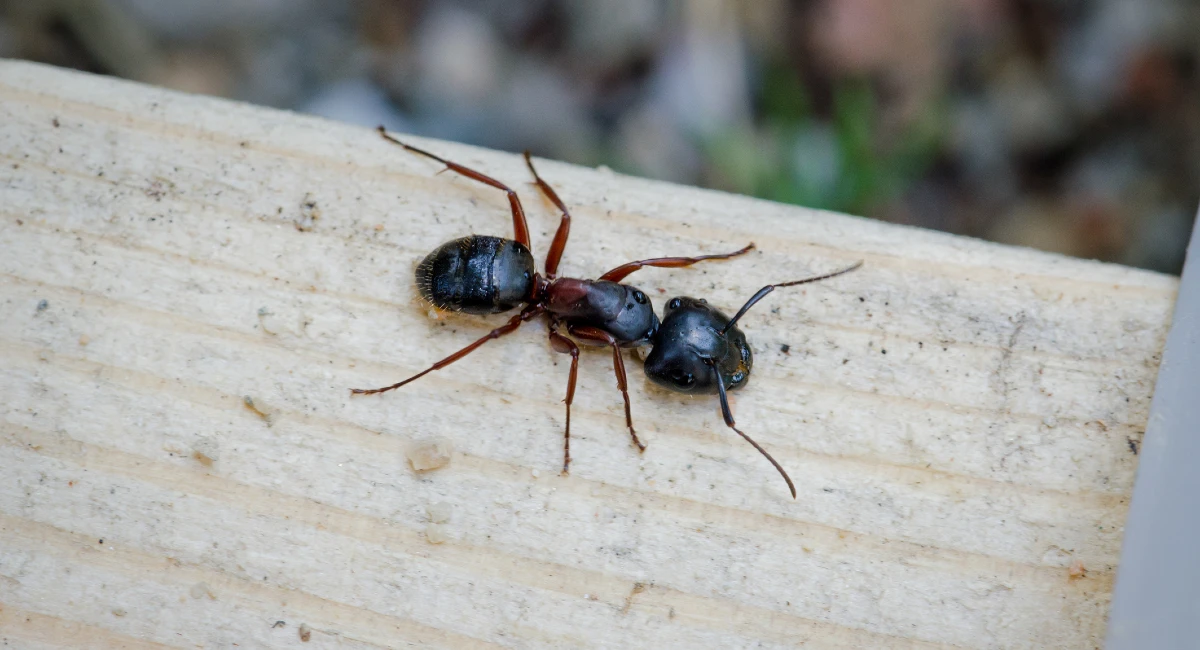
Yes, some big black ants bite, notably carpenter ants. They have strong mandibles and will bite as a defense mechanism. If bitten, you’ll feel a sharp pinch, followed by a burning sensation as formic acid is released. Symptoms are usually mild and can include redness, swelling, and a small, raised bump. Although non-venomous, there is a risk of infection if the skin is broken. If you experience an extreme reaction, consult a healthcare professional to rule out a secondary infection.
In customer-facing settings, such as retail or hospitality, an incident involving an ant bite could lead to liability concerns. In this situation, preventing infestations isn’t just about cleanliness; it’s about protecting people and your brand.
How to Get Rid of Big Black Ants
Once you've spotted them, the next question is usually how to get rid of big black ants. The approach you choose will depend on where the ants are and what type you're dealing with.
Inside the Home or Business
To reduce ant activity indoors:
- Clean up food crumbs and spills right away
- Store dry goods and pet food in sealed containers
- Fix plumbing leaks and remove standing water
- Seal entry points around windows, doors, and baseboards
- Use bait stations matched to the right species
It’s important to note that baits don’t work on all ant types, and using the wrong treatment can cause the colony to split and spread further. In homes, this may lead to ants showing up in new areas. In commercial units, this can escalate the issue across departments or units.
Outside the Property
Outdoor nests are often the source of indoor ant problems. Managing outside activity can help limit the spread of ants indoors:
- Cut back tree limbs and shrubs that touch the building
- Keep mulch and landscaping away from the foundation
- Remove logs, yard debris, or unused construction materials
- Watch for activity near sidewalks, patios, and HVAC units
Office buildings and healthcare facilities with landscaped courtyards, retail storefronts, and outdoor restaurant dining areas should be inspected and monitored for ant nests to avoid further migration. Similarly, homeowners should keep a lookout for telltale signs in their yards and around the building foundations.
Home Remedies for Big Black Ants: What to Know
There are numerous online suggestions for how to get rid of large black ants, although these have mixed results. Some common homemade blends include:
- Vinegar and water sprays: The strong scent can disrupt ant scent trails and deter them from foraging in treated areas, but it doesn’t reach the nest.
- Baking soda and sugar traps: Sugar attracts ants, while baking soda is intended to harm them when ingested; however, colonies are rarely affected since only a few workers feed on the bait.
- Essential oils like peppermint or tea tree: These oils may repel ants temporarily, especially around doors and windows, but the effect fades quickly and rarely eliminates the colony.
DIY solutions can be effective in eliminating the visible signs of an infestation, but they will not necessarily stop the infestation from returning. In addition, home remedies can disrupt foraging trails, making it harder to track and treat the nest. This means the ants often return once the smell has faded, which is concerning for specific sectors, such as food production or healthcare, that risk compliance breaches and health violations.
How Gregory Pest Control Can Help
Large black ants in your dining area, office break room, or communal kitchen are bad for customers, employees, and tenants. More importantly, it can impact business turnover and brand image. Gregory Pest Control can help mitigate the risks.
Our technicians live in the surrounding area and are familiar with local ant species. We begin with a thorough inspection to identify the type of ant, its nesting location, and the conditions that attract it. Then, we build a treatment plan that targets the problem directly, eliminating guesswork.
We provide ant control solutions for homeowners and commercial clients, including:
- Property management companies
- Food and beverage processing
- Healthcare facilities
- Foodservice operations
- Retail and consumer service businesses
With ongoing protection options and routine monitoring, we help reduce the likelihood of future infestations, keeping your property protected, both inside and out.
If you need professional help with an ant infestation, schedule your free inspection today, and protect your property.
Book Your Free Pest Inspection Today
Our local technicians will assess your property and recommend tailored solutions. Fast, friendly, and completely obligation-free.
- Safe, targeted treatments
- Local experts, fast response
- Trusted, trained technicians