© 2026 Rentokil North America © Gregory Pest Solutions – All Rights Reserved.
Spring in North and South Carolina brings warmer temperatures and longer production days, but also nesting season — and with it, a wave of bird pressure. Pigeons, European starlings, and house sparrows are among the first species to begin scouting nesting sites as temperatures climb through March and April.
These birds are drawn to the structural features that define most food processing and distribution facilities: high ceilings, sheltered overhangs, HVAC housings, and loading dock canopies. For facilities managing food and beverage pest control programs, spring bird activity represents one of the most underestimated compliance risks of the year.
What makes bird pressure particularly costly isn't the bird itself; it's the speed at which a single nesting event can cascade into a regulatory issue, a contamination event, or a failed third-party audit.
Why Spring Accelerates the Risk
Bird nesting behavior follows a predictable biological pattern. When ambient temperatures consistently reach the mid-60s°F, species like pigeons and starlings shift from roosting to active nest-building. This transition occurs quickly, often within a 7- to 10-day window, and targets the exact structural features that food facilities rely on for ventilation, climate control, and logistics.
A starling pair, for example, can establish a functional nest inside an unscreened HVAC intake or soffit gap in under 48 hours. Once eggs are laid, the nest becomes a fixed contamination source: feathers, droppings, ectoparasites, and organic debris begin to accumulate in and around air-handling systems, rooftop equipment, and dock-door tracks.
For facilities operating under BRCGS, SQF, or FDA audit frameworks, this isn't a nuisance; it's a non-conformance waiting to happen.
Structural Vulnerabilities Most Facilities Overlook
Bird pressure can occur wherever a facility's envelope offers shelter, warmth, or proximity to food sources. In food operations, the most common vulnerability points are often outside the scope of routine interior pest monitoring.
- Loading docks and dock door assemblies are among the highest-risk zones. Worn bumper seals, gaps between trailer bodies and dock levellers, and overhead canopy structures create sheltered micro-environments that pigeons and sparrows exploit for nesting. These are also the areas where inbound and outbound products are most exposed.
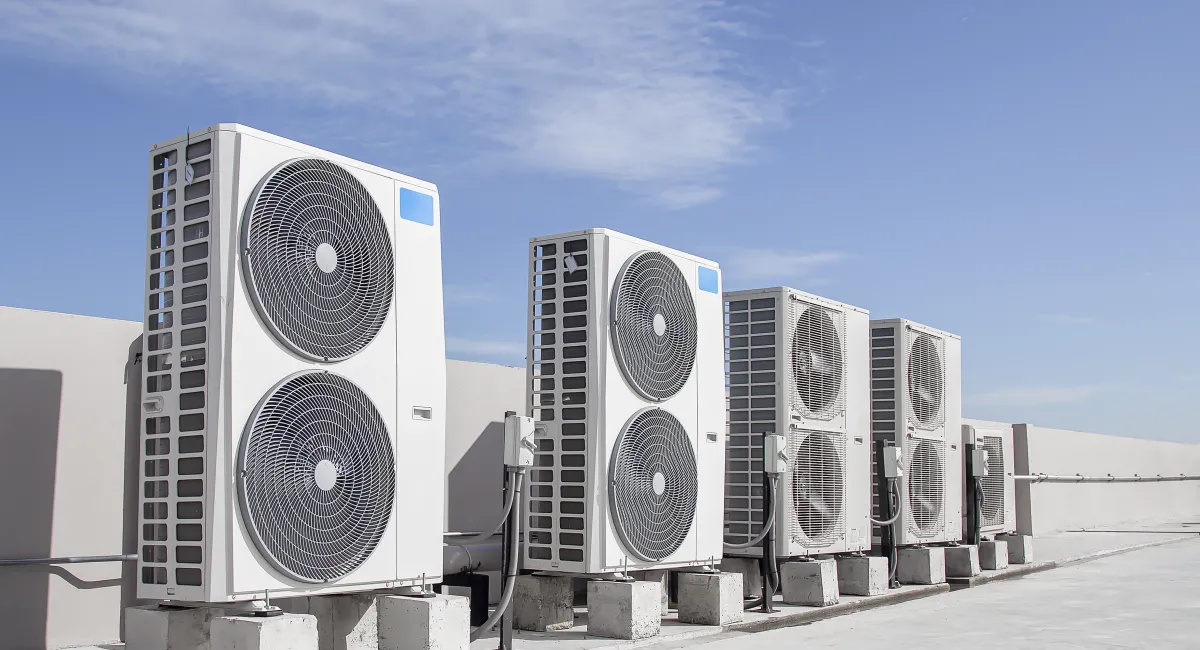
- Rooftop HVAC units and exhaust vents generate warmth that attracts roosting birds well before nesting season begins. Without properly maintained screening or exclusion barriers, these units become direct pathways for airborne contaminants, such as feather fragments, dried faecal particulates, and fungal spores, to enter production and storage environments.
- Corrugated exterior cladding and soffit joints offer narrow cavities that starlings and sparrows favor for concealed nesting. These sites are difficult to inspect from ground level and are frequently missed during standard facility walkthroughs.
The common thread is that these vulnerabilities exist at the boundary between controlled interior environments and external exposure; precisely where contamination risk is highest and where auditors focus their attention.
Nests Lead to Audit Failures
The timeline from initial nesting activity to a material compliance issue is shorter than most operations teams expect.
Within the first 48 to 72 hours of nest establishment, droppings begin accumulating on surfaces below the nest site. Bird faeces can carry pathogens, including Salmonella, E. coli, and the fungus that causes histoplasmosis. In a food facility context, droppings on or near a dock door, conveyor entry point, or air intake represent a direct product safety risk.
During the first week, secondary pest activity often follows. Bird nests harbor mites, lice, and dermestid beetles, all of which can migrate into interior spaces and introduce new contamination vectors, complicating an already active pest management program.
If a nest stays for two weeks, your building will have wall stains and clogged drains. In the worst cases, dust and bird waste can get sucked through broken vent screens and blow into your clean indoor rooms.
When your business has a big inspection coming up, timing is everything. A nest built in April will leave proof of birds long before your June audit. Our audit protection programs are designed to find and fix these problems early so you don’t get marked down or fail your inspection.
Why Netting and Spikes Placement Matters More Than Product
Bird exclusion methods like commercial netting and spike systems are well established, but their effectiveness depends entirely on where and how they're deployed.
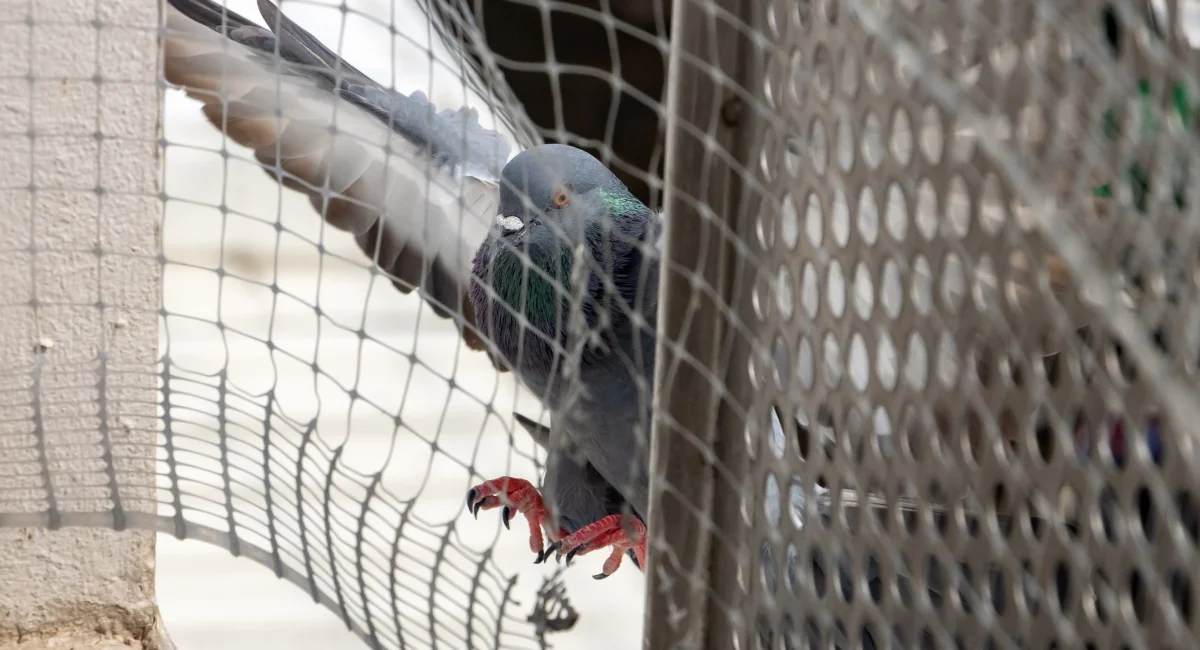
- Commercial bird netting works by physically blocking access to high-value harborage zones — the sheltered, elevated spaces where birds prefer to nest. In food facilities, netting is most effective when installed across the interior of dock canopies, beneath rooftop equipment skirts, and over open structural bays in warehouse ceilings. The goal is to deny access to the specific microenvironments the birds seek.
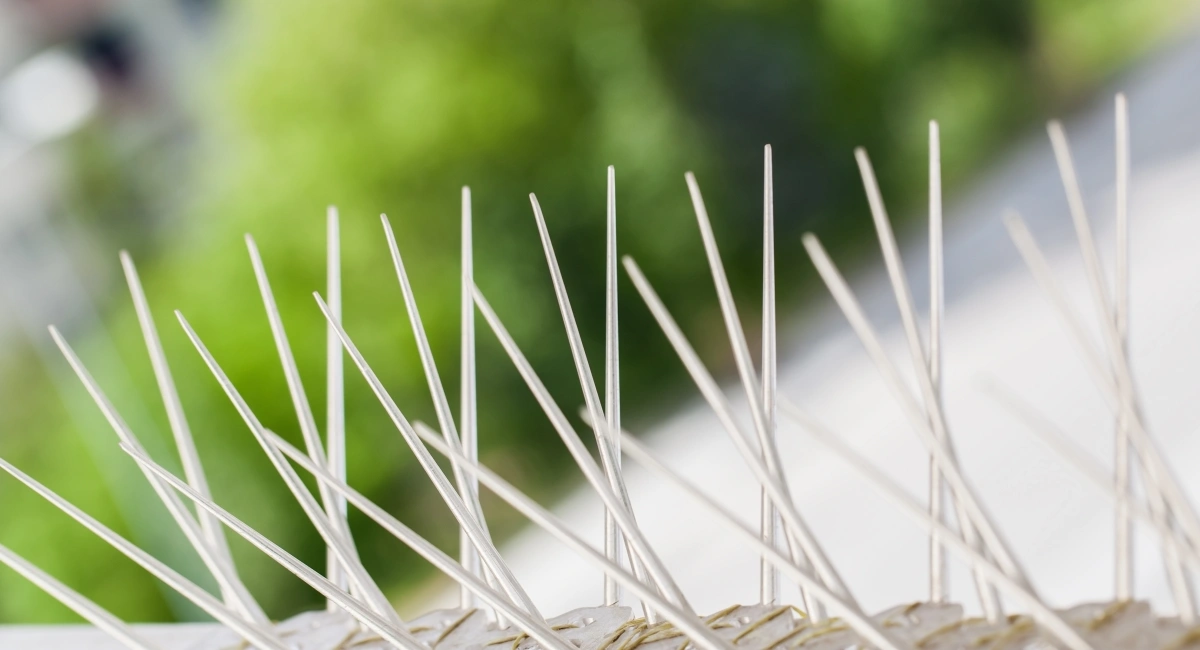
- Bird spike systems are designed to prevent roosting and perching on ledges, parapet walls, signage, and horizontal structural members. For pigeons, especially a species that returns to the same perching sites repeatedly, spikes disrupt the behavioral pattern that precedes nesting. Removing the perch removes the scouting behavior that leads to nest establishment.
What matters most is picking the right tools based on how birds act and how your building is set up, which is the core of our bird control and exclusion services. A spike strip installed on a decorative ledge may look proactive, but if the real entry point is an open roof vent 40 feet away, you have wasted your money because the risk is still there.
What Inspectors Are Actually Looking For
Third-party auditors operating under GFSI-benchmarked schemes don't simply check whether a facility has bird control measures in place. They evaluate whether those measures are appropriate, maintained, and effective.
During an exterior inspection, auditors typically assess:
- Evidence of active or recent nesting on or near the building envelope
- Condition and coverage of exclusion devices (netting integrity, spike placement, screening on vents and intakes)
- Accumulation of droppings on docks, walkways, rooftops, and near entry points
Inside the facility, they look for indicators, such as feather fragments in production areas, pest-monitoring data indicating bird-related activity, and whether the facility's pest management documentation accounts for bird pressure as a distinct risk category.
Missing even one of these steps can lead to a failed inspection. In food safety auditing, bird activity is a major red flag. It suggests that your entire pest plan is broken, rather than just being a one-time mistake.
Building a Proactive Spring Strategy
In the Carolinas, you need to act before birds start nesting. It is best to start in late winter or early spring, when roosting patterns are still forming, and exclusion work can be completed without disturbing active nests (which may be protected under the Migratory Bird Treaty Act for certain species).
A strong spring bird management strategy includes three elements:
- Building Inspections: Finding every spot where birds might hide (like loading docks, vents, and roofs) identifies risks early.
- Entry Point Repairs: Installing or fixing nets and spikes in the spots where birds are most likely to land stops the problem before it starts.
- Ongoing Monitoring: Tracking bird activity as part of a commercial pest management programme ensures that small issues are never ignored or forgotten.
Protecting the Operation You've Built with Gregory Pest Solutions
Bird pressure in food facilities is rarely dramatic. It doesn't announce itself the way a rodent sighting or a cockroach complaint does. It builds quietly: a pair of starlings in a soffit gap, a pigeon roosting on a dock canopy, droppings accumulating on a rooftop unit that no one inspects until an auditor does.
The cost involves more than just fixing the mess. It includes the failed audit, the extra paperwork, the stopped shipments, and the damage to a brand's name. For operations and facilities leaders managing complex food environments across North and South Carolina, spring birds are just as risky as any other pest.
If your facility hasn't checked for birds before the spring nesting season, now is the time to start. Gregory Pest Solutions' Smarter Pest Management™ approach is built around identifying these risks early, before they become findings.
Contact Gregory Pest Solutions Today to Schedule a Free Inspection.
Stop bird activity from ruining your next inspection by setting up a professional site check to keep your facility compliant.
Book Your Free Pest Inspection Today
Our local technicians will assess your property and recommend tailored solutions. Fast, friendly, and completely obligation-free.
- Safe, targeted treatments
- Local experts, fast response
- Trusted, trained technicians