© 2026 Rentokil North America © Gregory Pest Solutions – All Rights Reserved.
You love your backyard's pool, and unfortunately, so do ants. Ants, including flying ants, are often drawn to pools and the areas around them, creating an unpleasant surprise for swimmers and homeowners alike. If you’ve noticed ants floating in the water, crawling along the deck, or gathering near the pool equipment, it’s time to take a closer look at what’s attracting them and how to keep them out.
Why Ants Are Attracted to Your Pool
Ants do not love your pool because they want to swim. They usually look for water, food, or shelter. And pools provide abundant moisture, especially during the warmer months, when it is harder to find elsewhere.
The smell of sunscreen, spilled drinks, or snack crumbs can also lure them closer. Ants are often particularly drawn to moist environments and are commonly found in shaded areas near patios and pool decks.
Flying ants swarm during warm, humid weather, when you want to enjoy your pool most. These ants are typically reproductive males and females that leave their colonies to mate and start new ones. After a heavy rain or on a muggy summer evening, you might notice hundreds of flying ants in or near your pool, attracted by the water's reflective surface and nearby lights.
Common Ant Species Found Around Pools
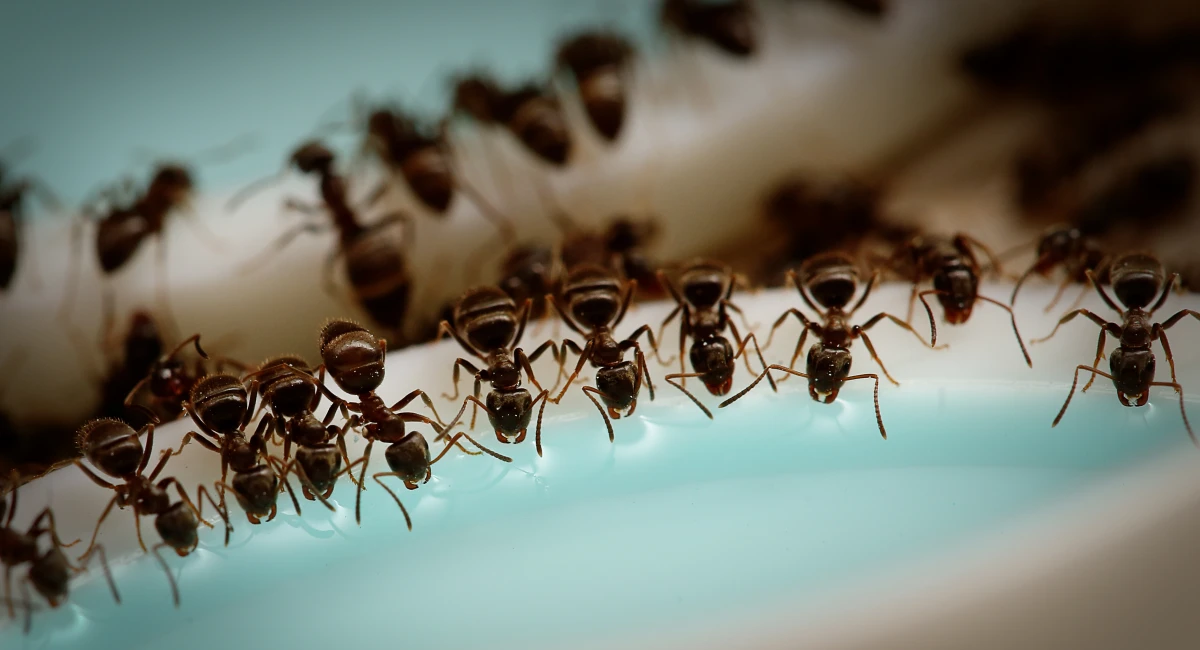
While nearly any type of ant can wander near a pool, a few species are more likely to cause problems. Dark rover ants are small, dark brown ants that prefer damp conditions and can often be found around pool coping, patios, and landscaped edges. Fire ants may also build mounds near pool equipment or along walkways, posing a painful risk to swimmers and pets. Carpenter ants, attracted to moist or decaying wood, might take interest in wooden decks or fences surrounding the pool area.
Flying ants are not a separate species but rather the reproductive form of various ant species, including carpenter ants and rover ants. When these winged ants appear, it's a sign that a mature colony is nearby.
How to Get Rid of Ants in and Around Your Pool
Begin by thoroughly cleaning the surrounding area. Sweep up crumbs, wipe down surfaces, and rinse away sticky residues from drinks or sunscreen. Pay close attention to cracks in the concrete, joints in the deck, or gaps in pavers; these small openings often hide ant trails or nesting spots.
Next, check for nests around the pool perimeter, especially near equipment pads, planters, or under decorative stones. If you see ants coming and going from a particular area, that's a strong sign of colony activity. For minor issues, you can try removing potential food sources and sealing entry points. However, if you notice large numbers of ants or reinfestations, professional ant control can help to eliminate them in the long term.
How to Keep Flying Ants Out of the Pool
To keep flying ants out of your pool, try reducing outdoor lighting at night since bright lights attract them during mating flights. Covering the pool when not in use can also help prevent ants from landing in the water. If you notice repeated swarms, it may indicate that a nearby colony is maturing and sending out reproductive ants each season. In that case, addressing the colony directly is key.
It's also essential to maintain good yard hygiene. Trim back overhanging branches, remove leaf litter, and avoid leaving damp towels or pool toys lying around. These small steps reduce the moisture and debris that attract ants, making your pool area less appealing to them.
Preventing Future Ant Problems Around the Pool
Keeping ants away from your pool is an ongoing process that involves regular maintenance and proactive pest management. Inspect and repair cracks in concrete, coping stones, or pool decks. Even small gaps can serve as entry points for ants searching for water. Ants are drawn to sweet or greasy residues, so keeping pool areas clean reduces the number of attractants.
Schedule regular pest inspections, especially during the warmer months. A professional technician can identify early signs of ant activity and apply preventive treatments before a small problem becomes a large one.
When to Call a Professional
Ant infestations around pools can be stubborn, especially when colonies are hidden deep underground or beneath concrete. DIY efforts might temporarily reduce their numbers, but without treating the source, ants will return.
At Gregory Pest Solutions, we offer targeted ant control. Our team understands the habits of ants common to North and South Carolina, including the dark rover ant, fire ant, and carpenter ant. We use innovative treatment methods designed to protect your home, family, and outdoor spaces. With our help, you can enjoy your pool without worrying about ants invading your summer fun.
Book Your Free Pest Inspection Today
Our local technicians will assess your property and recommend tailored solutions. Fast, friendly, and completely obligation-free.
- Safe, targeted treatments
- Local experts, fast response
- Trusted, trained technicians