800-922-2596 Call Now Book a Free Inspection

Voles are small, burrowing animals that damage lawns, fruit trees, and landscaping. Their relentless feeding on plant roots, tubers, and tree bark results in steep financial losses for commercial orchardists, while homeowners contend with destroyed landscaping, damaged irrigation systems, and unstable, tunnel-riddled lawns. 

Whether it’s a backyard or a communal garden in North Carolina and South Carolina, Gregory Pest Solutions will find a solution to effectively manage vole populations.


What are Voles?

Voles are small, ground-dwelling mammals that resemble mice but belong to a different rodent family. Sometimes called “meadow mice” or “field mice,” they have short tails, stocky bodies, small eyes, and dense brown or gray fur.

They are active year-round, don't hibernate, and continue feeding and burrowing even as the weather cools. Unlike moles, they don't leave dirt mounds, making detection more difficult. The main indicators of vole activity for homeowners, gardeners, and site managers are surface runway networks and chewed vegetation.

Actual Size: 3 1/2 to 5 inches.

Appearance: Soft, thick fur in shades of brown and gray, with a lighter underside. Their tiny ears are tucked into the fur, and their short tail is wrapped in fine hair.

Habitat: Typically found in underground burrows, often hidden within grassy fields or areas with dense vegetation.

Habits:

  • Frequently called “meadow mouse” or “field mouse.”
  • Build elaborate tunnel networks, damaging turf and landscaping.
  • Prolific breeders, they produce several litters yearly, each with 4–8 young.
  • Use high-pitched sounds for communication.

How to Get Rid of and Remove Voles

Voles are legally classified as non-game mammals, meaning they can be managed or removed when causing damage to property or landscaping. However, there is no easy way to get rid of voles, and DIY solutions have mixed results: traps are often missed, and repellent sprays are weather-dependent and therefore unreliable. Using pest control experts to get rid of voles is more efficient and less time-consuming for homeowners and site managers.

Identifying Voles and Signs of Infestation

The sooner you identify and confirm an infestation, the better the outcomes with vole management and control. The details below will allow you to make an informed decision about next steps and limit the damage to your property.

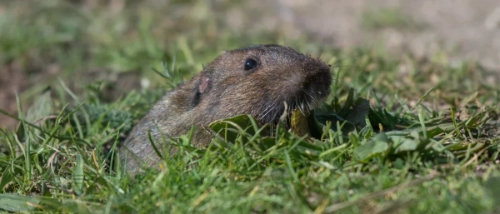
Field vole eating berry among grass

Meadow Voles in North and South Carolina

There are two vole species in North and South Carolina, but meadow voles are the most likely to be found on residential and commercial properties. Meadow voles are attracted to open turf, expansive lawns, and overgrown fields, making large properties and suburban estates particularly susceptible to their activity. The other Carolina species is the woodland vole—also known as the pine vole. It lives in wooded areas and landscapes with substantial ground cover.

Meadow voles are poor climbers and rarely enter buildings, preferring underground burrows that can damage landscaping and turf. They feed mainly on grasses and seeds and reproduce quickly, making them difficult to maintain if not caught early.

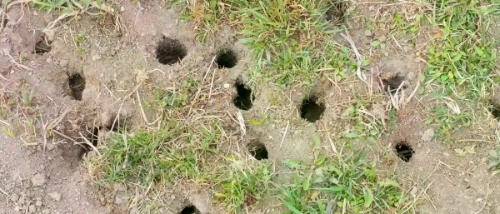
Vole holes in grass

Meadow Vole Habitat

These pests prefer areas with thick cover, such as tall grass, shrubs, brush, and even woodpiles. Meadow voles avoid wide-open spaces instead building tunnel systems under protective ground cover that offers shelter from predators and extreme weather.

Your lawn, garden beds, or landscaped areas may offer ideal shelter for them, especially if the grass is overgrown or debris has been left behind. Mulch beds near foundations, raised gardens, and compost piles are attractive to voles looking for food and shelter.

Although voles rarely enter homes, they often nest close to buildings. If conditions outside are right, they build tunnels across yards, sometimes wrapping around sheds or garages.

Meadow Vole Behaviors, Threats, or Dangers

Meadow voles rarely come into direct contact with humans, and the health risk is low, though they can spread diseases such as plague and tularemia. Damage to crops, orchards, and young trees is the main threat.

Their constant chewing degrades irrigation tubing, garden fencing, and foundation insulation. This means vole damage is not limited to what's visible. Over time, their tunnels can cause soil to collapse, leading to uneven ground or unstable walking areas.

Voles also reproduce quickly. A single female vole can produce several litters a year, each containing three to six young. This rapid growth makes infestations hard to control once started. That's why controlling voles early is essential.

Signs of Voles in the Yard and Grass

Your yard is the most likely place to see signs of vole activity. If you notice raised, snake-like trails in the lawn or grass that seem cut away in strange patterns, you may be looking at evidence of voles in your yard. These runways are used repeatedly as voles move from nest sites to food sources.

In more serious infestations, you'll find holes about the size of a golf ball. These openings lead to their underground tunnel networks. If the grass around these areas feels soft or gives underfoot, it's often because the voles have hollowed out the top layer of soil beneath.

Voles also target root systems. As roots are severed underground, turf can brown or die off in streaks. If you see isolated patches of unhealthy grass, particularly in areas near shrubs or dense vegetation, it may be time to inspect for voles. Left unchecked, these animals can turn a healthy lawn into a patchy, unstable mess.

How to Spot Voles in the House

It's uncommon, but a vole inside is possible, especially in basements, crawl spaces, or under porches. Most of the time, voles prefer to stay outdoors. However, they may find their way inside if their tunnel systems connect to access points near the foundation.

Inside, voles behave much like other pests. They search for shelter, chew on cardboard and insulation, and may nest in storage boxes or unused spaces. If they're in your home, it's usually a sign that the population outside has grown large enough to push them into less typical spaces.

Though not dangerous in the traditional sense, their droppings and urine can create sanitation issues. If you notice signs indoors, such as gnawed material, faint squeaking, or visible nests, it's time to take action.

Vole Prevention Tips to Protect Your Property

There are a number of ways to protect your lawn and property from vole intruders, including:

Prevention & Environment

  • Keep grass trimmed and remove leaf piles or brush
  • Reduce ground clutter where voles might hide or build nests
  • Change the outdoor environment to make it less attractive to voles

Physical Barriers

  • Use wire mesh or hardware cloth around plant roots to block access
  • Consider raised beds combined with underground fencing to help reduce vole populations

Food Source Management

  • Seal compost piles or locate them away from active garden beds
  • Clean bird feeders regularly and remove spilled seed promptly
  • Eliminate any available food sources that voles may exploit

Professional Solutions

  • Our technicians assess your property's weak points and offer practical, lasting solutions
  • Services include sealing foundation gaps and adjusting landscaping practices
  • Seasonal checkups are scheduled in line with vole breeding cycles
  • We remove current vole populations and show you how to keep them out

Seeing Voles?

Call now to book your free inspection.

Get In Touch

About Us

The personal touch sets Gregory apart from other companies. We have been family owned and locally operated since 1972. We get to know you, your family and home.