© 2026 Rentokil North America © Gregory Pest Solutions – All Rights Reserved.
Ants love to invade homes in North and South Carolina. Once these pests find an easy source of food and moisture, they're hard to get rid of. No matter the type, ants are highly organized, persistent insects that can quickly turn a few stray foragers into a full-scale infestation. Knowing why they invade and how to get rid of ants in the house is the first step toward reclaiming your living space.
Why Ants Enter Your Home
Ants live in colonies built around a single purpose: to find food, water, and shelter. If the outdoors no longer offers these comforts (especially during drier months), they'll seek a stable environment in your home. Kitchens and bathrooms are prime targets, offering moisture and nutrition. Even the smallest crumbs or sticky residue can provide a feast for an ant colony.
Moisture plays a significant role in attracting ants. Leaky pipes, dripping faucets, or damp wood under sinks create ideal habitats. When one or two enter your home, they will leave a scent trail, meaning more workers will follow directly to the food or water source. A single scout ant can become the signal for hundreds of others to follow, forming an unbroken trail that seems to appear out of nowhere.
Common Ant Species Found in Homes in the Carolinas
Several different ant species invade homes in the Carolinas:
- Odorous house ants are small and brown or black. They give off an unpleasant, rotten odor when squashed. Remarkably adaptable, these ants nest both indoors and outdoors build large colonies supported by multiple queens.
- Carpenter ants are larger than most other species. They are typically black and can cause structural damage by tunneling through wood to build galleries and expand their colonies, which can reach thousands of individuals. Seeing sawdust-like material, called frass, is a strong sign of carpenter ant activity.
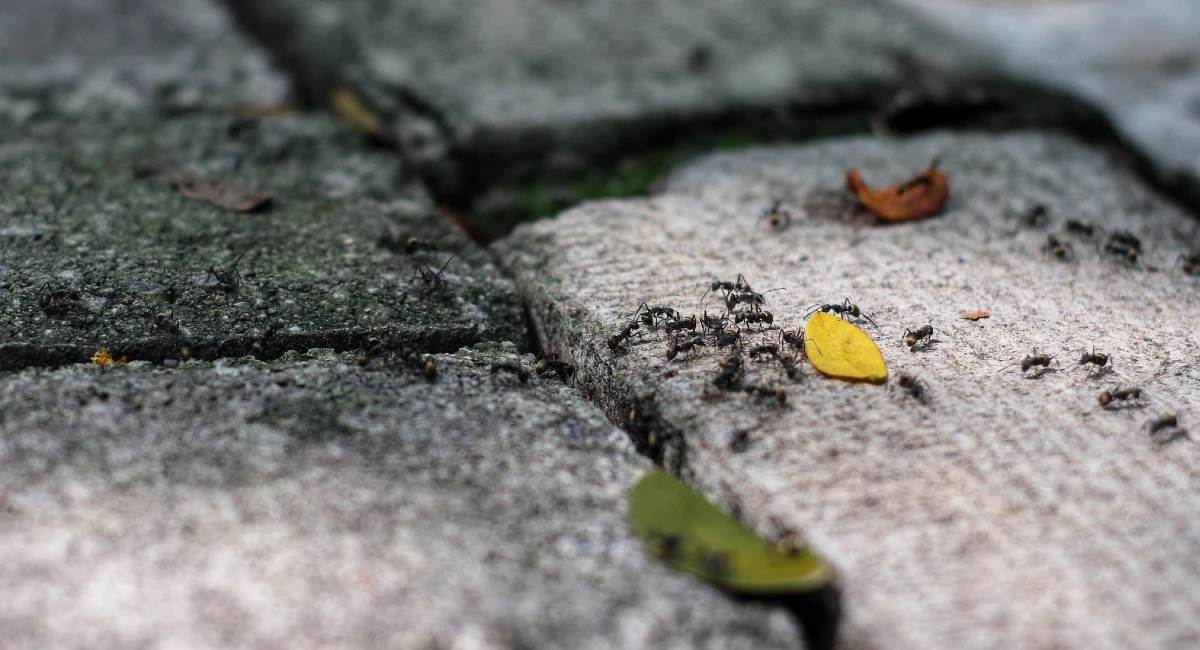
- Pavement ants are known for building small mounds between pavement slabs and for trailing along baseboards or tile grout.
- Crazy ants, named for their erratic movement, have also become more widespread in the region, capable of establishing massive colonies and nesting inside electrical equipment or appliances.
How Ants Find Their Way Indoors
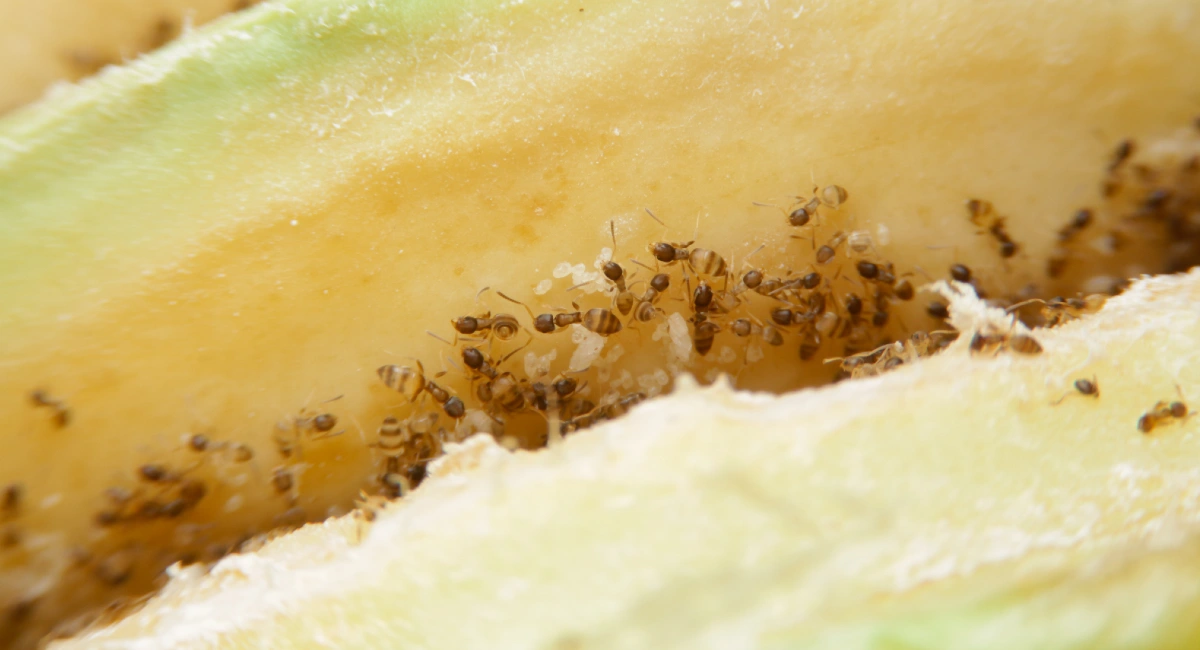
Ants are highly organized communicators. When one ant discovers a food source, it releases pheromones to signal to other ants where it is. They follow the smell to the food, so this is why you might suddenly see a trail of ants in your home. As more ants travel the same path, they deposit even more pheromones, strengthening the scent and reinforcing the route until the whole colony knows the way. It's this process that turns a single crumb on your kitchen floor into a marching line of ants across the counter.
Even the smallest entry points allow ants to invade. Cracks around windows and doors, gaps in baseboards, and spaces near plumbing or electrical lines allow them access. Once they establish a route, they will continue to use it until it is disrupted.
What Attracts Ants Indoors
Odorous house ants are drawn to sweets like sugar, syrup, and fruit from afar. Carpenter ants target damp, soft wood for nesting, while protein sources like pet food and insects attract pavement ants. Moisture—particularly in kitchens, bathrooms, and basements—is a primary draw, especially in dry weather. Additionally, some species nest near warm appliances or electrical wiring, which mimics natural heat sources.
Understanding these preferences helps pinpoint where colonies form and how to disrupt their life cycle. A common misconception is that killing visible ants solves the problem, but those ants are only a fraction of the colony. The rest, including the queen, stay hidden behind walls or under floors. Killing workers can even trigger colony relocation, spreading the issue further. Effective control means targeting the nest, not just the ants you see.
How to Get Rid of Ants in the House
To succeed, you first need to know where ants are coming from and what's attracting them.
-
Follow the trails: Track visible trails to find their source, then clean these areas thoroughly with soap and water to erase the pheromone scent. Regular cleaning disrupts communication and stops new foragers following the same path.
-
Control moisture:
-
Repair leaky pipes and dripping faucets immediately
-
Check beneath sinks and near the foundation for water accumulation
-
Use dehumidifiers in basements or crawl spaces
-
Remove water-damaged wood to deter carpenter ants
-
-
Use baiting for existing infestations: This is the most reliable method; workers carry the slow-acting toxin back to the nest, where it reaches the queen and larvae.
-
Avoid relying on sprays: They only offer temporary relief and can cause colonies to fragment into smaller, harder-to-control nests.
-
Call the professionals: If ants keep returning, contact expert ant exterminators like Gregory Pest Solutions—we've spent decades eliminating ant colonies across the Carolinas and know how to deliver lasting results.
Preventing Future Ant Problems
Once an infestation has been eradicated, prevention becomes the ongoing priority. Focus on these key areas:
- Seal entry points: Inspect your home's perimeter for cracks or gaps and seal them, paying close attention to doors, windows, foundation edges, and spots where pipes or wires enter the building.
- Clear vegetation: Trim shrubs and trees that touch exterior walls, as branches can act as a bridge for ants.
- Manage moisture and ventilation: Proper airflow and moisture control go a long way in discouraging ants from nesting indoors.
- Maintain the exterior: Store firewood away from the foundation and clean gutters regularly to prevent dampness building up near walls.
- Keep up regular maintenance: By consistently removing the conditions that attract ants, you'll make your home far less appealing to ants.
When to Call for Professional Ant Control
Minor ant activity can often be resolved through diligent cleaning and sealing, but established infestations are another matter. Colonies that persist despite home treatments usually have multiple nesting sites or satellite colonies hidden within walls or foundations. When ants keep returning, professional inspection becomes essential.
Trained technicians identify the species, pinpoint hidden nests, and apply specialized baits for long-term control—along with preventive recommendations tailored to your home. Regular service from a trusted provider like Gregory Pest Solutions ensures that once ants are gone, they stay gone.
Whether dealing with ants in the kitchen, carpenter ants in wood structures, or flying ants swarming near windows, our solutions offer lasting relief through proven methods and detailed local knowledge. Call now to book your free inspection.
Book Your Free Pest Inspection Today
Our local technicians will assess your property and recommend tailored solutions. Fast, friendly, and completely obligation-free.
- Safe, targeted treatments
- Local experts, fast response
- Trusted, trained technicians