800-922-2596 Call Now Book a Free Inspection

Odorous house ants are among the most common ant species found in homes and businesses across South Carolina. Known for the unpleasant odor they release when crushed, these ants are small in size but capable of forming large, resilient colonies that are difficult to eliminate without professional help. They are a major nuisance pest, especially in kitchens, bathrooms, and apartment complexes, where their foraging trails often lead directly to food sources.

If you have noticed trails of ants that smell when squashed, it may be time to contact our team for professional odorous house ant control. Our treatments are designed to reduce infestations and provide long-term strategies to prevent them from returning.

Color: Brown to black

Legs: 6

Shape: Small, oval body with an uneven thorax when viewed from the side

Size: About 1/16 to 1/8 inch (1.5–3.2 mm)

Antennae: Yes, 12 segments without a distinct club

Region: Found throughout the United States, including the Carolinas; commonly nests indoors near moisture sources such as pipes, wall voids, and under sinks, and outdoors beneath stones, mulch, or logs. When crushed, they emit a strong, rotten coconut-like odor.

Odorous House Ants Identification

The odorous house ant (Tapinoma sessile) is a tiny insect, usually about one-sixteenth to one-eighth inch long. Their bodies are brown to black in color, and they are often mistaken for other small ant species, such as pavement ants. The easiest way to tell them apart is by their smell. When crushed, odorous house ants release a foul, rotten-coconut-like odor. This trait has earned them their name, making them one of the easiest ant species to identify in homes.

Colonies of odorous house ants are particularly difficult to control because they can have multiple queens. While many ant species have only one reproducing queen, odorous house ants build expansive colonies with several queens producing eggs simultaneously. This means the colony can survive even if one queen is removed, allowing infestations to spread quickly and become long-lasting.

Odorous House Ants Behavior, Diet & Lifecycle

Like most ants, odorous house ants are social insects that live in structured colonies. Workers forage for food and water, while queens reproduce and keep the population strong. A single colony can include thousands of ants, so infestations can become noticeable quickly once they invade.

Their diet is highly adaptable. Odorous house ants feed on sweets, proteins, and greasy foods. They are particularly drawn to sugary substances such as honeydew, syrup, or fruit. Outdoors, they gather honeydew from aphids and other insects, which is one of their primary food sources. Indoors, crumbs, spills, and uncovered pet food bowls often attract foraging trails.

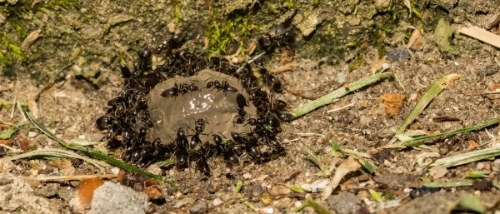
swarm of ants on melon

Signs of Odorous House Ant Infestation

The most obvious sign of an odorous house ant infestation is the appearance of long trails of ants moving between food sources and their nest. These trails are often seen along baseboards, countertops, and walls. Another strong indicator is the odor produced when ants are squashed.

Odorous house ants are prevalent in apartments or multi-family buildings. They move easily between units, making them hard to control with DIY efforts alone. Even when residents treat their own space, neighboring colonies can quickly reinvade.

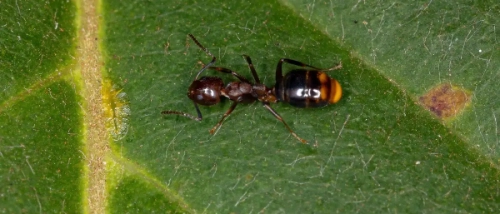
adult female odorous ant on massive leaf

Common Places Found

Odorous house ants are highly adaptable and can thrive outdoors and indoors, making them a persistent nuisance if not addressed.

Outdoors, these ants typically nest in soil, under rocks, mulch, logs, or other natural debris. They are opportunistic and will relocate their colonies in response to environmental stressors such as heavy rain, drought, or extreme temperatures. Because of their mobility, outdoor nests can sometimes be difficult to locate, as colonies may split or move to more favorable conditions.

Indoors, odorous house ants are particularly drawn to areas that offer warmth, moisture, and food. Common nesting sites include wall voids, beneath floors, behind baseboards, under kitchen cabinets, or near hot water pipes. They also nest in insulation or around window and door frames where humidity may accumulate. These ants are often attracted to sweet substances like syrup, honey, and fruit, but they will also feed on grease and protein-based foods, including pet food.

Their versatility in nesting habits allows infestations to persist throughout the year. Even small colonies can expand quickly when they find consistent access to food and water, and trails of ants can extend long distances between indoor and outdoor sites. 
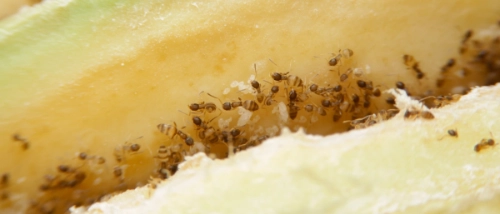
A close up of Odorous House Ant workers feeding on ant gel bait placed by a Pest Control Professional.

Are Odorous House Ants Dangerous?

Odorous house ants are not directly harmful to humans. They don’t bite aggressively or transmit diseases like some other insects do. However, they can still be a significant nuisance, primarily because of the distinctive, unpleasant odor they emit when crushed. This smell is often described as a strong, rotten coconut or chemical-like scent and can linger in areas where infestations are present, making living spaces uncomfortable.

While they may initially seem harmless, odorous house ants can indicate broader problems. Their presence often points to food or moisture sources attracting them, and their ability to establish multiple indoor nests means infestations can proliferate if left unchecked. In kitchens, pantries, and bathrooms, they may contaminate food and surfaces as they forage, creating hygienic concerns.

Because these ants are highly adaptable and challenging to eliminate with over-the-counter methods, professional pest control intervention is usually the most effective way to address the problem. Experts can locate the primary colony, identify satellite nests, and apply targeted treatments to prevent the infestation from spreading further. Acting promptly, especially when you notice trails of ants or detect that characteristic odor, can save time, reduce stress, and prevent a minor problem from becoming a major one.


Ready to Get Started?

For smarter Odorous house ant solutions, give Gregory a call any time.

800-922-2596 

Odorous House Ants Prevention

Preventing odorous house ants starts with eliminating the resources they seek. Kitchens should be cleaned regularly, and crumbs and spills should be wiped up immediately. Food should be stored in sealed containers, and pet food bowls should not be left out overnight. Trash should be secured in bins with tight-fitting lids and taken out frequently.

Moisture reduction is also essential. Leaky pipes, dripping faucets, or damp areas around bathrooms and kitchens provide water sources that attract ants. In the outdoors, keeping mulch and soil away from the foundation can discourage nesting near buildings. Sealing entry points such as cracks around windows, doors, and utility lines makes it more difficult for ants to invade.

While these steps can help reduce infestations, they are often insufficient to eliminate them completely. Colonies with multiple queens are resilient and can quickly rebound. Professional odorous house ant control is the most effective approach for lasting results.

Where Can I Get Help With Odorous House Ants?

If you are struggling with odorous house ants in your home or business, Gregory Pest Solutions is here to help. Our team provides professional odorous house ant control that targets infestations at their source. Whether you need immediate relief or long-term protection, our services are designed to deliver effective results.

When you notice ants that smell when crushed or long trails of tiny brown-black ants invading your property, don’t wait for the problem to worsen. Get in touch with Gregory Pest Solutions today to schedule a service and learn how we can protect your home or business.

How Can Gregory Pest Remove Odorous House Ants From My Home Or Business?

At Gregory Pest Solutions, we provide targeted treatments for odorous house ants that go beyond surface-level control. Our process begins with thoroughly inspecting your property to identify food sources, nesting sites, and entry points. Once we understand how ants are moving through your home or business, we create a treatment plan targeting active workers and the main colony.

Our treatments directly address colonies, including those hidden in wall voids or other hard-to-reach places. Unlike DIY sprays that only kill visible ants, our methods target the root of the infestation. With ongoing service options, we also provide preventive care to limit the chances of ants returning.

We serve homeowners and businesses, offering residential and commercial pest control programs tailored to each property. In homes, we protect kitchens, bathrooms, and living areas where ants are most active. For businesses, we focus on protecting food service areas, break rooms, and apartment buildings where infestations are common.

Other Types of Ants

Frequently Asked Questions About Odorous House Ants

They are called odorous because they give off a rotten coconut-like smell when squashed. This odor is one of their most recognizable traits.

They eat many foods, including sweets, grease, and proteins. Honeydew from aphids is one of their primary food sources outdoors.

They do not bite or sting and are not considered poisonous. The main issue is that ants forage in kitchens and pantries, contaminating food.

Colonies often contain multiple queens, which allows them to survive and rebuild even if one queen is removed. This makes DIY treatments less effective.

No, odorous house ants do not bite or sting. They are nuisance pests rather than dangerous insects.

Keeping food sealed, cleaning up crumbs, and reducing indoor moisture help make your property less attractive to ants. Ongoing service with Gregory provides the best long-term prevention.

Get In Touch

About Us

The personal touch sets Gregory apart from other companies. We have been family owned and locally operated since 1972. We get to know you, your family and home.