800-922-2596 Call Now Book a Free Inspection

Are you seeing little black ants on your property? They’re among the most common household ants in South and North Carolina and throughout the Southeast. Their tiny size allows them to move through the smallest cracks and crevices, often leading them into kitchens, bathrooms, and pantries in search of food. Though they’re small, their ability to form large colonies and persistently forage makes them a frustrating pest for both homes and businesses.

If you suspect you have an infestation, whether in your business or home, and you’re not sure what type of ants you’re dealing with, call Gregory Pest Solutions; we’re here to help.

Color: Shiny black

Legs: 6

Shape: Small, slender body with an uneven thorax and a two-segmented waist

Size: About 1/16 inch (1.5 mm)

Antennae: Yes, 12 segments with a three-segmented club at the ends

Region: Found throughout the United States, commonly nesting in soil, under stones, in woodwork, and inside wall voids of homes.

How to Identify Little Black Ants

As their name suggests, little black ants (Monomorium minimum) are tiny and black. Colonies can include thousands of workers and multiple queens. Because of this, eliminating only a portion of a colony is not normally enough to solve the problem, and infestations are likely to return without professional help.

Little Black Ants Behavior, Diet & Lifecycle

Little black ants live in colonies, where each member has a defined role: queens reproduce, workers gather food and care for the young, and soldiers defend the nest from threats. Their colonies can survive for years, replenished by queens that continually lay eggs.

The little black ant life cycle begins with eggs that hatch into larvae. These larvae develop into pupae before becoming adults. Workers live for a few months, while queens may live much longer, ensuring the colony's survival. Because colonies contain multiple queens, they are particularly resilient, making infestations hard to eliminate.

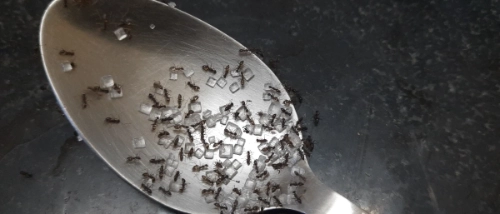
The small black ant diet is varied, but includes sweets, grease, meats, and decaying organic matter. Stray crumbs, spills, and food residue make kitchens and pantries, in particular, a target for invasion. Once they find a reliable food source, their pheromone trail attracts others, and before you know it, you’re dealing with a superhighway of ants.
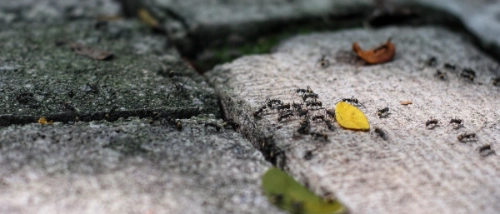
swarms of black ants

What are the Signs of a Little Black Ant Infestation?

The clearest sign of a little black ant infestation is ant trails. These can be several feet long, traveling across countertops and baseboards, or even climbing up walls to access food and water.

Small clusters of ants may also appear around sinks, electrical outlets, or windowsills, which can serve as entry points. Outdoors, colonies create small soil mounds and nests hidden under stones or rotting wood.

Because little black ants are so small, infestations may go unnoticed at first. By the time ant trails become obvious, colonies are often well established.

little black ants on spoon with sugar

Common Places Little Black Ants are Found

Little black ants travel along established trails, allowing large numbers to move efficiently between nests and food sources.

Not surprisingly, indoor activity is generally localized to restaurant kitchens, restrooms, and pantries, where they forage for crumbs left on plates, countertops, and pet food bowls, and hydrate in sinks or from spills.

In yards and gardens, they build nests and establish colonies in soil, under rocks, along sidewalks, in lawns, or near the foundations of homes and other structures. Because little black ants are opportunistic, they use cracks and gaps in walls, windows, doors, and foundations to gain entry.

To stop a colony from taking over, early detection and corrective action is critical.

little black ant close up on rock

Are Little Black Ants Dangerous to People or Pets?

These ants are not known to spread disease or cause serious harm, so they are classified as nuisance pests rather than dangerous ones. They’re not poisonous to humans or pets, and a black ant bite typically only causes mild irritation. That said, anyone experiencing unusual symptoms should seek advice from a healthcare professional.

For regulated industries,  such as restaurants, hospitals, or food processing facilities, an infestation can quickly become a compliance concern due to the contamination risk. For this reason, any activity should be assessed and treated as quickly as possible.

Seeing Little Black Ants?

Call now to book your free inspection.

How to Prevent Little Black Ants

Preventing little black ants requires reducing access to food, water, and shelter. Kitchens should be kept clean, with crumbs and spills wiped up promptly. Food should be stored in sealed containers, and trash removed regularly. Reducing excess moisture by fixing leaks and maintaining dry conditions around sinks and bathrooms is also helpful.

Sealing entry points around windows, doors, and foundations with caulk, expanding foam, or weatherstripping can help reduce ant populations. However, once a colony is established on your property, the chance is high that it will return. Professional treatments are thorough, durable, and robust for long-term, year-round prevention.

How Can Gregory Pest Remove Little Black Ants From My Home Or Business?

An expert exterminator from Gregory Pest Solutions will be your full-service pest solutions provider. We specialize in the effective removal and prevention of ants and their nests, using proven methods for  homes or businesses.

Our residential and commercial pest control services are designed to protect both homeowners and businesses. We focus on kitchens, bathrooms, and food storage areas for homes, where ants are most active. Ant control is critical to maintaining health standards and customer satisfaction for businesses, particularly those in the food service industry.

DIY methods, such as ant traps, may offer short-term results but rarely address the colony as a whole. Gregory's treatments target colonies directly, reducing populations and addressing the root of the problem. With ongoing service options, we provide continued protection, keeping properties less attractive to ants over time.

Types of Ants

Frequently Asked Questions About Little Black Ants

Little black ants are tiny insects, about one-sixteenth of an inch long, known for forming large colonies with multiple queens. They are common nuisance pests that often invade kitchens, bathrooms, and outdoor spaces in search of food.

Outdoors, they nest in soil, under rocks, and in decaying wood. Indoors, they are often found in wall voids, behind baseboards, or near moisture sources.

They eat sweets, grease, meats, and decaying plant matter. Once they discover a reliable food source, they leave trails that attract more ants from the colony.

DIY methods, such as sprays or traps, may reduce visible ants but can only do so much. Professional little black ant exterminators like Gregory Pest Solutions target the nest directly and provide long-term control.

Keeping food sealed, cleaning up spills, and fixing moisture problems can make your home less attractive to ants. For lasting protection, ongoing service with an expert exterminator helps reduce the chance of future infestations.

If you have little black ants on your property, Gregory Pest Solutions can help. We provide customized services to address infestations at their source and prevent them from spreading. Whether you are looking for immediate relief or long-term protection, our team has the experience and training to deliver the right solution. Contact us today to learn how we can provide effective ant control for your home or business.

Get In Touch

About Us

The personal touch sets Gregory apart from other companies. We have been family owned and locally operated since 1972. We get to know you, your family and home.