800-922-2596 Call Now Book a Free Inspection

Finding an insect with long antennae and large hind legs in your basement or crawl space can be startling. Camel crickets, also called cave crickets, have a humpbacked shape and a spider-like appearance, making them among the more unsettling indoor invaders in North and South Carolina.

Camel crickets are not poisonous and don’t bite, but they can still be problematic. With their sudden jumps and tendency to feed on household items, they are unwelcome guests in any home or business.

At Gregory Pest Solutions, our technicians provide inspection, treatment, and prevention strategies to address infestations safely and effectively. If camel crickets are causing problems in your basement, crawl space, or business, we're ready to help with long-term solutions.

Color: Light to dark brown, often mottled with dark bands on some segments

Legs: 6

Shape: Humpbacked with long, very enlarged hind legs

Size: ½”- 1 ½” (13-33 mm)

Antennae: Yes

Region: All

What Is a Camel Cricket?

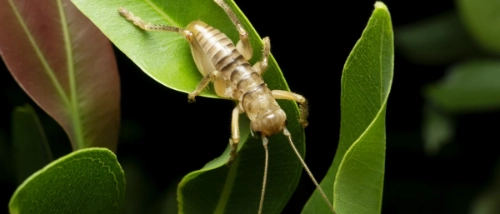
Camel crickets are an invasive species, native to Asia (primarily Japan and China). They look remarkably like large spiders, which can be disconcerting for anyone who stumbles across them, but unlike spiders, they only have six long legs. Other physical features that set them apart include a curved back and hind legs shaped like drumsticks. 

They have poor eyesight and are most active at night, when they use their two long antennae to navigate by sensing temperatures. Unlike a typical cricket, they do not make noise by rubbing their wings together, but like typical crickets, they do lay eggs. Female and male camel crickets are easy to tell apart because females have an ovipositor, or tube-like appendage used for egg-laying.

Camel crickets are scavengers that feed on organic material, fungi, and household items, such as cardboard and clothing. Their feeding behavior is one reason infestations can result in noticeable damage indoors.
Camel Cricket Life Cycle

The camel cricket life cycle begins in spring when females lay eggs in moist soil. Nymphs hatch in early summer and resemble smaller versions of adults. By late summer, populations are at their peak. Because they can reproduce quickly, spotting one often means there are more nearby.

Are Camel Crickets Dangerous and Do They Bite?

Not particularly. They’re crickets, which means that they don’t have any fangs or the ability to bite. They have also never been known to transmit diseases.  The problem with camel crickets is that they like to graze on fabrics and other man-made materials. Outdoors, they can damage seedlings and tender plants when populations are large.  Additionally, because of their long back legs, they’re great jumpers, which means if you find a bunch of them in your basement it can get fairly frightening pretty quickly. So, they’re not dangerous, but they’re trouble.


camel cricket leaping from one leaf to another

Signs of a Camel Cricket Infestation

Several signs indicate a camel cricket infestation. Multiple crickets appearing in basements or crawl spaces, damage to stored items, and clusters of insects under outdoor structures are common indicators. Because they thrive in dark, damp areas, infestations can grow unnoticed until their numbers are significant.

Seeing Camel Crickets?

Call now to book your free inspection.

How To Prevent Camel Crickets?

You can keep camel crickets out of your home by following a few simple steps. Here’s what to try:

  • Seal entry points. Check the seals around your doors, windows, and floors for any gaps or cracks where crickets could get inside.
  • Reduce moisture. Camel crickets like damp places, so use a dehumidifier in your basement or crawl space to make these areas less appealing.
  • Tidy up outdoors. Remove leaf piles, mulch, and overgrown plants near your home’s foundation, since these are good hiding spots for crickets.
  • Declutter indoors. Stacked boxes, bags, and clutter give camel crickets lots of places to hide. Try to keep storage areas tidy and off the floor when you can.

Even with good prevention, camel crickets can still get inside, especially when the seasons change and they look for warmth and shelter. If you keep seeing them, it might be time to call a professional.

How Can Gregory Pest Remove Camel Crickets From My Home or Business?

Camel crickets are tough pests; routine fixes like vacuuming or sealing gaps are rarely enough for a large infestation. Our proven approach starts with a thorough inspection to locate activity and attractants. We then apply targeted treatments to dark, damp areas to reduce numbers. 

Our team also provides long-term prevention advice, like controlling moisture, sealing entry points, and improving storage, to make your property less appealing to pests. If you've seen jumping crickets in your basement, groups near outdoor buildings, or damage to stored items, our experienced technicians know how to help. Contact us today to schedule an inspection.

Camel Cricket Control Frequently Asked Questions

No. They do not bite or spread disease, but they may damage belongings and startle people with their sudden jumps.

Seeing multiple crickets in basements or crawl spaces, finding damaged fabrics or cardboard, and spotting clusters under outdoor structures.

Yes. They can chew on fabrics, paper, cardboard, and sometimes plants, especially when infestations are extensive.

Camel crickets are drawn to areas with moisture, shade, and shelter. Indoors, basements, and crawl spaces provide the cool and damp environment they need. They often move inside when conditions outside become too dry or too cold. The camel cricket can establish themselves quickly if basements or crawl spaces are humid and cluttered. Cracks in foundations and gaps around doors or vents provide easy entry points.

Gregory Pest Solutions has helped homeowners and businesses across North and South Carolina with pest problems for decades. Our trained technicians understand the local pest issues in your area and have the tools and experience to handle them. Whether you have a one-time issue or need ongoing protection, you can reach us with a simple phone call.

Get In Touch

About Us

The personal touch sets Gregory apart from other companies. We have been family owned and locally operated since 1972. We get to know you, your family and home.