800-922-2596 Call Now Book a Free Inspection

Powderpost wood-borer beetles are tiny insects that burrow into wood. They can seriously damage furniture, flooring, and even the structure of homes or businesses.

When you see small holes in hardwood floors, door frames, or antique furniture, it may be the first sign of activity. Unlike termites, which eat wood continuously, powderpost beetles spend much of their life cycle hidden inside, quietly chewing through wood products. The infestation may already be advanced by the time the damage becomes visible. That is why contacting a pest control professional is the most reliable way to stop the problem and prevent further destruction.

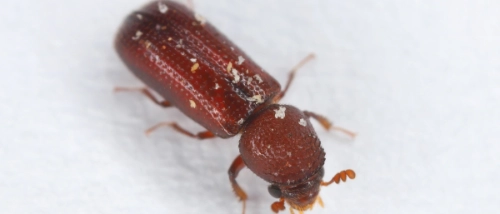
Color: Reddish-brown to dark brown

Legs: 6

Shape: Narrow, cylindrical body

Size: About 1/8 to 1/4 inch long

Antennae: True

What is a Powderpost Beetle and What Do They Look Like?

Powderpost beetles are a group of seventy different species of wood-boring beetles. Unlike most similar wood-boring insects, they have distinctly visible heads and antennae with two-jointed clubs. Their primary food source is deciduous trees, which they bore into and reduce to powdery dust over time. Powderpost beetle larvae live inside wood and feed on the natural starches and sugars as they grow.

What makes them especially concerning is their life cycle. Females lay eggs inside cracks or pores of unfinished or unsealed wood. Once the eggs hatch, the larvae burrow deep into the wood and feed for months or even years. It is during this stage that the most damage occurs.

Because they prefer wood with high starch content, powderpost beetles often target hardwoods such as oak, ash, and walnut. This makes them a threat to furniture, hardwood flooring, trim, paneling, and even structural timbers. The fine, talcum-like frass, a combination of wood particles and droppings, is one of the main indicators of activity. Over time, untreated infestations can weaken wood to the point where it crumbles to the touch.

Powderpost Beetle Behavior, Diet & Lifecycle

Powderpost beetles cause a lot of damage because they spend most of their lives hidden inside wood. These are the reasons they are hard to spot early:

  • Larvae feed from inside the wood. They tunnel through the wood fibers, eat natural starches, and weaken the structure from the inside out.
  • Exit holes are a late warning sign — small, round holes and powdery frass only appear when adults emerge, often after significant damage is already done
  • Adults live just a few weeks, focused entirely on reproduction; females seek out unsealed wood to deposit eggs and restart the cycle
  • The lifecycle varies widely — from a few months to several years, depending on species and conditions
  • Warm, humid environments speed development; cooler, drier conditions slow it down
  • Infestations are easy to miss — larvae can remain active inside wood long before any visible damage appears
  • Effective treatment targets both adults and larvae still active within the wood

Common Signs of a Powderpost Beetle Infestation

Powderpost beetles are hard to spot because they spend most of their lives inside wood. Learning the warning signs can help you catch the problem sooner and prevent costly damage. Look out for the following:

Fine, Powdery Dust (Frass)

One of the clearest signs is a fine, flour-like powder called frass found around or under wooden items. This powder is waste left by larvae as they tunnel through wood. Fresh frass is light in color, while older frass turns darker over time.

Small Round Exit Holes

Adult beetles chew their way out of wood, leaving tiny round holes about 1/32 to 1/16 of an inch wide. If you find these holes in common problem areas such as hardwood floors, furniture, or beams, it is a strong sign of beetle activity.

Weakened or Crumbling Wood

Wood with a heavy infestation may feel soft or hollow when tapped. In serious cases, the surface can crumble easily because larvae have eaten away the inside.

If you notice any of these signs, consider getting a professional inspection. Our technicians can identify the beetle species and suggest the best way to protect your property from destructive, wood-boring insects.
How to Prevent Powderpost Beetles From Entering Your Home

Powderpost beetles are attracted to wood with a lot of moisture and starch, especially unsealed or unfinished surfaces, where females can easily lay eggs. They often get in through firewood stored indoors, untreated lumber, or antique furniture that hasn’t been checked.

To reduce your risk:

  • Keep wood dry and well-ventilated, since humidity helps beetles develop faster.
  • Seal and finish any exposed wood surfaces to keep females from laying eggs.
  • Check your furniture and floors regularly, especially if you see new exit holes or fine dust.
  • Look over antiques and secondhand wood items before you bring them into your home.
  • Try not to store firewood indoors if you can help it.

DIY treatments might help with surface beetle activity, but they usually don’t reach larvae deep inside the wood. For long-term protection, professional powderpost beetle control from Gregory Pest Solutions is your best bet.

Seeing Powderpost Beetles?

Call now to book your free inspection.

powderposte beetle damage on wood

Professional Powderpost Beetle Control and Treatment

When powderpost beetles are discovered, quick action is essential. The longer they remain in wood, the more damage they cause. Gregory Pest Solutions offers customized powderpost beetle treatment for residential and commercial properties. Our team begins with a detailed inspection to confirm the source of the problem and the extent of the infestation. We then recommend targeted treatment options, which may include localized applications or, in severe cases, fumigation.

Because every situation is different, our technicians create a plan that matches your needs. If you have been searching for how to get rid of powderpost beetles, the answer lies in combining proven treatments with professional knowledge.

Our comprehensive residential and commercial pest services are designed to protect homes and businesses from costly damage.

Frequently Asked Questions About Powderpost Beetles

Yes, adult beetles can fly, which is how they move from one piece of wood to another. Their short adult lifespan is focused on reproduction.

No, powderpost beetles do not bite humans or pets. The damage they cause is limited to wood products.

Treatment depends on the extent of the infestation. Furniture may be treated with surface applications or heat treatments, while infested flooring can require localized treatment, board replacement, or fumigation in more severe cases. A professional inspection is the best way to determine the right approach and ensure larvae hidden inside the wood are fully addressed.

Termites eat wood continuously and live in colonies, causing widespread destruction. Powderpost beetles, on the other hand, cause damage individually as larvae tunneling inside the wood, leaving behind exit holes and powdery frass.


Termites eat wood continuously and live in colonies, causing widespread destruction. Powderpost beetles, on the other hand, cause damage individually as larvae tunneling inside the wood, leaving behind exit holes and powdery frass.

If you suspect powderpost beetles are damaging your property, Gregory Pest Solutions can help. Our experienced team provides professional powderpost beetle treatment to protect furniture, flooring, and structural wood from ongoing damage. We offer comprehensive residential and commercial pest services, including fumigation when necessary, so you can feel confident that the infestation is fully addressed.

Get In Touch

About Us

The personal touch sets Gregory apart from other companies. We have been family owned and locally operated since 1972. We get to know you, your family and home.