800-922-2596 Call Now Book a Free Inspection
sole carpet beetle on snow

Quick Facts About Carpet Beetles

  • Carpet beetles are small fabric pests whose larvae feed on natural fibers like wool, silk, and leather, causing damage to household and commercial items.
  • Common signs of carpet beetle infestation include irregular holes in fabrics, shed larval skins, and small beetles near windows.
  • The larvae prefer quiet, hidden places with ample food, such as closets, beneath rugs, under heavy furniture, and in attics or vents where bird nests or dead insects may be present. Adults, however, are often found near windows as they are attracted to light.
  • The destructive larval stage can last several months to over a year, meaning significant damage can occur before the infestation is discovered. Professional treatment is often recommended for long-term elimination, as larvae hide in deep crevices unreachable by DIY methods.

Carpet beetles are small and go unnoticed until they've caused visible damage. Despite their size, they can cause significant problems for residential and commercial properties, damaging fabrics and upholstery. For property owners and managers, learning to recognize carpet beetles and understanding their behavior and treatment options can help prevent costly repairs. At Gregory Pest Solutions, we can help eliminate these pests and prevent them from returning.

Color: Black centers, with white, brown, and yellow patches in an irregular arrangement

Legs: 6

Shape: Round

Size: 1/16

Antennae: True

What Are Carpet Beetles and What Do They Look Like?

Carpet beetles belong to the insect family Dermestidae. Several species are found across North America, including the varied carpet beetle, the black carpet beetle, and the furniture carpet beetle. 

The name "carpet beetle" can be misleading because their activity is not limited to carpets. They infest many items made from natural fibers. They are sometimes mistaken for bed bugs because they are found in bedrooms, and some people develop a skin irritation when exposed to larvae. 

The varied carpet beetle is black with mottled patterns of white, orange, and yellow scales, while the black carpet beetle is larger, usually solid black or dark brown. Conversely, furniture carpet beetles have white, yellow, and black scales.

Carpet beetle eggs are white and oval-shaped. They are also small and can be difficult to spot. Their larvae look like tiny worms with spiky hair, and are either tan or brown, depending on their specific diet.

Common Signs of Carpet Beetles in Your Home

Adult carpet beetles are attracted to light and often gather on windowsills or lampshades. However, it’s not the adults that cause the damage, but their fabric-eating larvae.

The most obvious clue is when holes appear in wool clothing, rugs, upholstered furniture, and stored linens. Unlike moths, which tend to chew smooth, rounded holes, carpet beetle larva leave rough, irregular edges where fibers have been eaten away. You’ll find them

in dark, out of the wayareas, like closets and dresser drawers, where they feast on bedding, clothes, and even book bindings.

Shed larval skins are another warning sign. As larvae grow, they molt and leave behind papery, brownish shells. These cast skins are often discovered beneath rugs, along the sides of sofas, at the edges of closets, or behind heavy furniture.

Infestations can also be detected by finding tiny white eggs hidden in fabric folds or inside cracks near baseboards. Eggs are very small and often overlooked, but when they hatch, new larvae quickly join the feeding cycle.

carpet beetle in depth look at shell and fuzzy fur

Behavior, Diet, and Habits

Carpet beetles are small, but they can cause significant problems for hospitality businesses, property managers, and homeowners. Knowing how carpet beetles behave and what attracts them is key to understanding why professional help is often needed to protect your belongings and get to the root of the problem.

varied carpet beetle on white background

What do Carpet Beetles Look Like?

The appearance of the adult carpet beetle depends on the species. The varied carpet beetle is black with mottled patterns of white, orange, and yellow scales. The black carpet beetle is larger, usually solid black or dark brown. The furniture carpet beetle has white, yellow, and black scales.

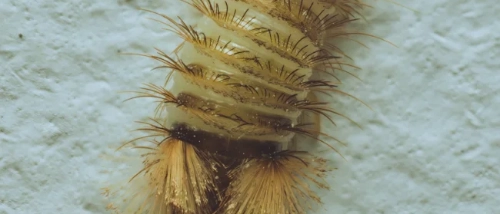
The larvae look very different. They are elongated, brownish in color, and covered with stiff hairs. Some species have tufts of hair near the tail end that they can raise when disturbed. These larvae are the stage responsible for fabric destruction. The hairs can also trigger allergic reactions in sensitive individuals, which sometimes leads to confusion about whether carpet beetle bites occur.

Searching online for carpet beetle images can help with identification, but many insects resemble carpet beetles. Accurate identification often requires a technician's trained eye.

carpet beetles larvae feeding on human hairs next to dropping

What do Carpet Beetles Eat?

The larvae feed on keratin, the protein found in animal products such as wool, silk, fur, leather, and feathers. They will also eat lint, pet hair, and even dead insects that may be trapped inside walls or attics. This varied diet makes them very adaptable. Adults, by contrast, feed on pollen, seeds, and plant nectar and do not damage fabrics.

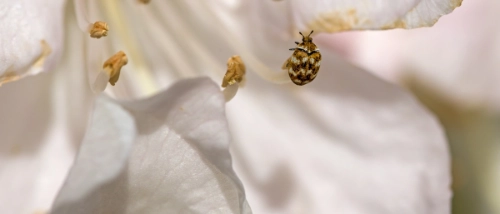
varied carpet beetle on white blossomed flower

How Do Carpet Beetles Get Inside?

Adult carpet beetles are good fliers and are drawn to light, so they often come in through open windows, doors, or damaged screens. They can also be carried in on fresh flowers, potted plants, or used furniture and clothing.

Gaps around pipes, worn weatherstripping, and foundation cracks give them easy access. Fabric pests like carpet beetles can also migrate indoors from nearby abandoned bird or rodent nests.

carpet beetle on big leaf

Where do Carpet Beetles Live?

Carpet beetles prefer dark, undisturbed areas in residential and commercial buildings, where food sources are readily available. Larvae are generally hidden beneath rugs, inside cabinets, under heavy furniture, or inside storage boxes. They are also found in attics, crawlspaces, or ducts where animal nests provide additional food. Because they avoid light, infestations often develop unnoticed until the damage is severe.

a varies carpet beetle larvae

Life Cycle of Carpet Beetles

Carpet beetles go through four distinct life stages: egg, larva, pupa, and adult. Understanding each stage can help explain why infestations can be so persistent.

Eggs

Females lay eggs in dark, sheltered spots, often on or near fabrics that will feed the larvae once they hatch. Eggs typically hatch within one to three weeks.

Larvae

The larval stage is the most destructive part of the cycle. Larvae feed on natural fibers, animal products, and stored goods for several months to over a year, depending on temperature and food availability. Because this stage lasts so long, damage can build up significantly before you notice a problem.

Pupae

Once larvae have fed enough, they pupate in hidden areas. This stage lasts around two to three weeks before adults emerge.

Adults

Adult carpet beetles live for several weeks. During this time, they mate and lay new eggs, starting the cycle again. Because adults are often the only visible stage, an infestation can continue even when no adults are seen.

Seeing Carpet Beetles?

Call now to book your free inspection.

How to Get Rid of Carpet Beetles

To get rid of a carpet beetle infestation, you need to eliminate both the adults and the larvae. Cleaning is the most effective preventive measure. By vacuuming, you remove tiny larvae and carpet beetle eggs that would otherwise grow into bigger problems.

Homeowners and property managers sometimes attempt DIY treatments using sprays or home remedies, which can offer temporary relief, but these methods don’t reach the larvae hidden deep inside cracks and undisturbed areas. For this reason, do-it-yourself control is usually only a short-term measure.

For long-term results, professional carpet beetle treatment is recommended. At Gregory Pest Solutions, our experienced technicians inspect the property to identify the source, locate the larvae, and develop a treatment plan tailored to your situation. We offer residential pest control services and comprehensive commercial programs to help families and facilities protect stored fabrics, upholstery, or merchandise.

Call Gregory Pest Control for Carpet Beetle Removal

If you notice what appear to be carpet bugs inside your home or facility, it is important not to ignore the problem. Infestations worsen over time as larvae continue to feed. Gregory Pest offers solutions for both residential and commercial properties in North and South Carolina. Our technicians combine local knowledge with proven methods to eliminate infestations at the source. Whether you need one-time service or ongoing protection, we are ready to help you protect your home and property from further damage.

Whether you’re a small business owner in Durham, managing a large corporation in Charlotte’s financial district, or a homeowner in the tranquil suburbs of Winston-Salem, we are your go-to provider for any pest issue.  Contact us today to arrange an inspection and get professional advice from our experts.

Carpet Beetles Frequently Asked Questions

Carpet beetle larva feed on natural fibers like wool, silk, leather, and feathers, leaving irregular holes in rugs, clothing, and upholstery. Over time, an infestation can result in costly damage to stored items and furniture.

No, they don’t bite humans, but some people have allergic reactions to the spiked hairs on the larvae. This can produce a minor rash and sometimes painful, localized dermatitis. If you are concerned, seek medical advice from your local healthcare professional.

Carpet beetles do not bite or spread disease, but their larvae can cause allergic reactions in some people. These reactions may appear as itchy, red welts that look like insect bites.

Yes. Adult carpet beetles have wings and can fly into your home or business searching for new food sources and locations to lay their eggs.

It’s possible you brought carpet beetles into your home via a used rug, textile, or article of clothing. More likely is that adult carpet beetles found an open window, torn screen, or loose door to squeeze through.

Signs include shed larval skins, small fabric holes, and adult beetles resting near windows. Finding these clues in dark, hidden areas of the home suggests larvae are already present.

Regular cleaning, proper storage of clothing, and sealing entry points can help reduce the risk. Professional inspection and ongoing protection provide the most effective long-term prevention.

Get In Touch

About Us

The personal touch sets Gregory apart from other companies. We have been family owned and locally operated since 1972. We get to know you, your family and home.