800-922-2596 Call Now Book a Free Inspection

Merchant Grain Beetles

Merchant grain beetles are a common stored-product pest in Carolina homes, warehouses, food processing facilities, and grocery stores. They infest grains, cereals, flour, and other packaged foods, leading to contamination, product recalls, failed inspections, and frustration among residential and commercial property owners.

At Gregory Pest Solutions, our team of trained technicians has decades of experience providing comprehensive residential and commercial services targeting beetles in all life cycle stages. Here you can learn about merchant grain beetles and gauge whether your pest problem requires professional intervention.

Color: Brown

Legs: 6

Shape: Narrow oval

Size: 1/10

Antennae: True

What is a Merchant Grain Beetle, and How to Control Them

The merchant grain beetle (Oryzaephilus mercator) is a tiny, hitchhiking pest that has become a familiar, unwanted guest in homes and businesses across the Carolinas. While it was originally a tropical insect, it earned the name mercator—Latin for "merchant"—because it traveled the globe as a stowaway on cargo ships, moving between countries hidden in shipments of nuts, dried fruits, and high-value food products. For many years, these insects managed to fly under the radar by being confused with their near-twin, the saw-toothed grain beetle, until researchers eventually identified them as a distinct species with their own unique behaviors.

They often infest goods during transit and storage, leading to substantial product loss, damaged reputations for food suppliers, and the need for strict quality control measures to prevent supply chain disruptions.

An infestation can start without warning, but there are practical ways to reduce and control infestations, such as:

  • Keeping your kitchen and pantry clean — wipe up spills immediately and keep worktops and storage units clean and tidy.
  • Routinely inspect dried food products and pet foods for any signs of infestation.
  • Discarding infested items in an outdoor trash bin, not inside, to prevent any spread.
  • Storing dry goods in airtight, hard-sided containers to stop pests from getting in.
  • Rotating your pantry stock, consume older items first, and follow first-in, first-out (FIFO) protocols. 

Since these beetles often arrive in deliveries and store-bought goods, prevention is not always possible. Once inside, professional help is usually needed to break the cycle.

Behavior, Diet, and Habits

Merchant grain beetles are resilient insects that thrive in various storage conditions.

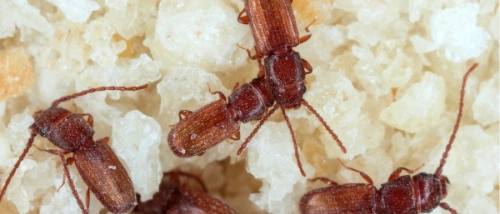
merchant grain beetle sitting on same colored grain

What do Merchant Grain Beetles look like?

Adult beetles are dark to medium brown and very flat-bodied, allowing them to fit into the tiny, narrow seams of packaging. Their bodies are about 2.5 mm long and feature six saw-like projections behind the head, so they are often confused with sawtooth grain beetles. Their small size makes them hard to detect until populations are well established.

dark beetles in pantry product

What do Merchant Grain Beetles Eat?

Merchant grain beetles feed on processed foods. Unlike some pests that require whole kernels, these beetles thrive on cereals, flour, pasta, dried fruit, nuts, and even chocolate. They rarely infest whole grains, preferring ground or processed foods.

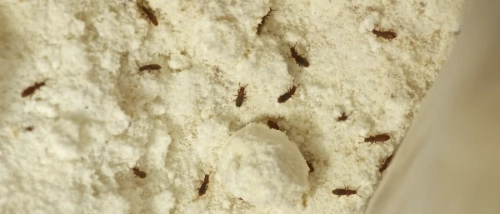
dark beetles in flour

Where do Merchant Grain Beetles come from?

Most infestations start when already-infested products are brought into the home or business. This is a common issue for warehouses, grocery stores, and restaurants where large amounts of packaged food are delivered and stored. From there, beetles spread to nearby products by crawling or, in the case of merchant grain beetles, by flying.

bag of flour tipped over

Where do Merchant Grain Beetles live?

These beetles live indoors in pantries, cupboards, and warehouses. They hide inside food packaging, cracks in storage shelving, and around areas where dry goods are kept. Their flat shape allows them to remain hidden, which is why infestations often go unnoticed until significant contamination occurs.

Life Cycle and Life Span of Merchant Grain Beetles

Merchant grain beetles' life cycle is relatively short, but their rapid reproduction makes infestations grow quickly. Females lay up to 200 eggs directly in food sources. Within a few days, larvae hatch and begin feeding.

Larvae develop through several stages before pupating, then emerging as adult beetles. Under warm conditions, the life cycle may be completed in as little as four to six weeks. Adult beetles can live up to 10 months and produce multiple generations each year. This cycle explains why a small number of beetles can quickly turn into a large infestation.

Why Do I Have Merchant Grain Beetles in My Pantry?

The most common reason for an infestation is bringing home infested food. Products like cereals, nuts, pasta, and dried fruits are especially vulnerable. Once beetles are introduced into a pantry, they spread quickly to other items.

Environmental conditions also play a role. Warm temperatures and access to food allow beetle populations to grow rapidly. Cracks in packaging, shelving, or storage areas provide ideal hiding spots where beetles remain undetected.

If you notice merchant grain beetles in your property, a stored food product is likely already infested. Locating and removing the source is the first step to control.

How Can Gregory Pest Help with Merchant Grain Beetles From My Home Or Business?

If you are dealing with merchant grain infestation inside your property, Gregory Pest Solutions can help. We have decades of experience with both residential and commercial pest control services, creating treatment plans tailored to each customer. We are a full-service pest solutions provider serving the Carolinas, committed to protecting food safety and reducing the stress of infestations.

Seeing Merchant Grain Beetle?

Call now to book your free inspection.

Merchant Grain Beetle Frequently Asked Questions

Most infestations begin when infested food is brought into the home or business. It then spreads to other products in pantries and storage units. The longer you store products, the higher the chance of infestation.

Yes, unlike sawtooth grain beetles, merchant grain beetles are capable fliers. They have fully formed wings and will fly to new food sources in easy reach.

Locating and removing infested products is essential to prevent contamination of new products and bulk deliveries. Professional treatment helps eliminate hidden populations.

They do not bite or spread disease, but infested products do need to be discarded, so it is both hugely wasteful and can be expensive to replace products. For commercial businesses, it can also lead to reputation harm, product recalls, and compliance failures.

Get In Touch

About Us

The personal touch sets Gregory apart from other companies. We have been family owned and locally operated since 1972. We get to know you, your family and home.